How we compare
Built for agents, not just humans.
Guru and Notion AI are great for humans. But your agents need structured entities, machine-readable relationships, and sub-100ms retrieval, not wiki pages.
Knowledge bases (Notion, Confluence, Guru)
Pages written for people to read. APIs bolted on as an afterthought. Agents have to parse free-form text every time and hope nothing has gone stale.
Oiya
Typed concepts, relationships and policies, designed for machine consumption. Structured retrieval in milliseconds, with governance designed for AI.
Knowledge bases were built for humans to read. Oiya is built for AI agents to work from: a governed knowledge layer with typed concepts, relationships and policies designed for multi-agent systems, not a wiki or docs tool with an API bolted on.
Knowledge bases vs Oiya, at a glance
Designed for
Knowledge bases (Notion, Confluence, Guru)
Oiya
Data shape
Knowledge bases (Notion, Confluence, Guru)
Oiya
Retrieval
Knowledge bases (Notion, Confluence, Guru)
Oiya
Freshness
Knowledge bases (Notion, Confluence, Guru)
Oiya
Governance
Knowledge bases (Notion, Confluence, Guru)
Oiya
Coexistence
Knowledge bases (Notion, Confluence, Guru)
Oiya
Human-readable ≠ machine-readable.
Guru charges $25 per seat per month for card-based knowledge with SME verification workflows. Notion offers flexible block-based workspaces starting free. Both are excellent at what they do: helping humans find and share information.
But neither was designed for agents. When your BD agent needs to know which partners have worked with pharmaceutical clients in the EU, a knowledge base returns a wall of text, maybe a wiki page titled "Partner Directory" with a table buried three scrolls down. The agent has to parse unstructured prose, guess at relationships, and hope the information is current.
Oiya returns a structured answer: a list of partner entities with relationship edges to pharmaceutical client entities, filtered by EU region, with provenance links to the sources that established each relationship. Sub-100ms. No parsing required.
What agents actually need.
Knowledge bases store text for humans to read. Oiya stores structured entities for agents to reason over. Every concept has a type, a definition, relationships to other concepts, and a version history. Agents don't parse. They query.
When your support copilot needs to understand the difference between "Standard SLA" and "Premium SLA," it doesn't search through a Notion wiki. It pulls the structured definitions, compares the attributes, and gives the customer a precise answer. No guessing. No hallucinating from stale text.
Structured knowledge. Instant retrieval. Zero ambiguity.
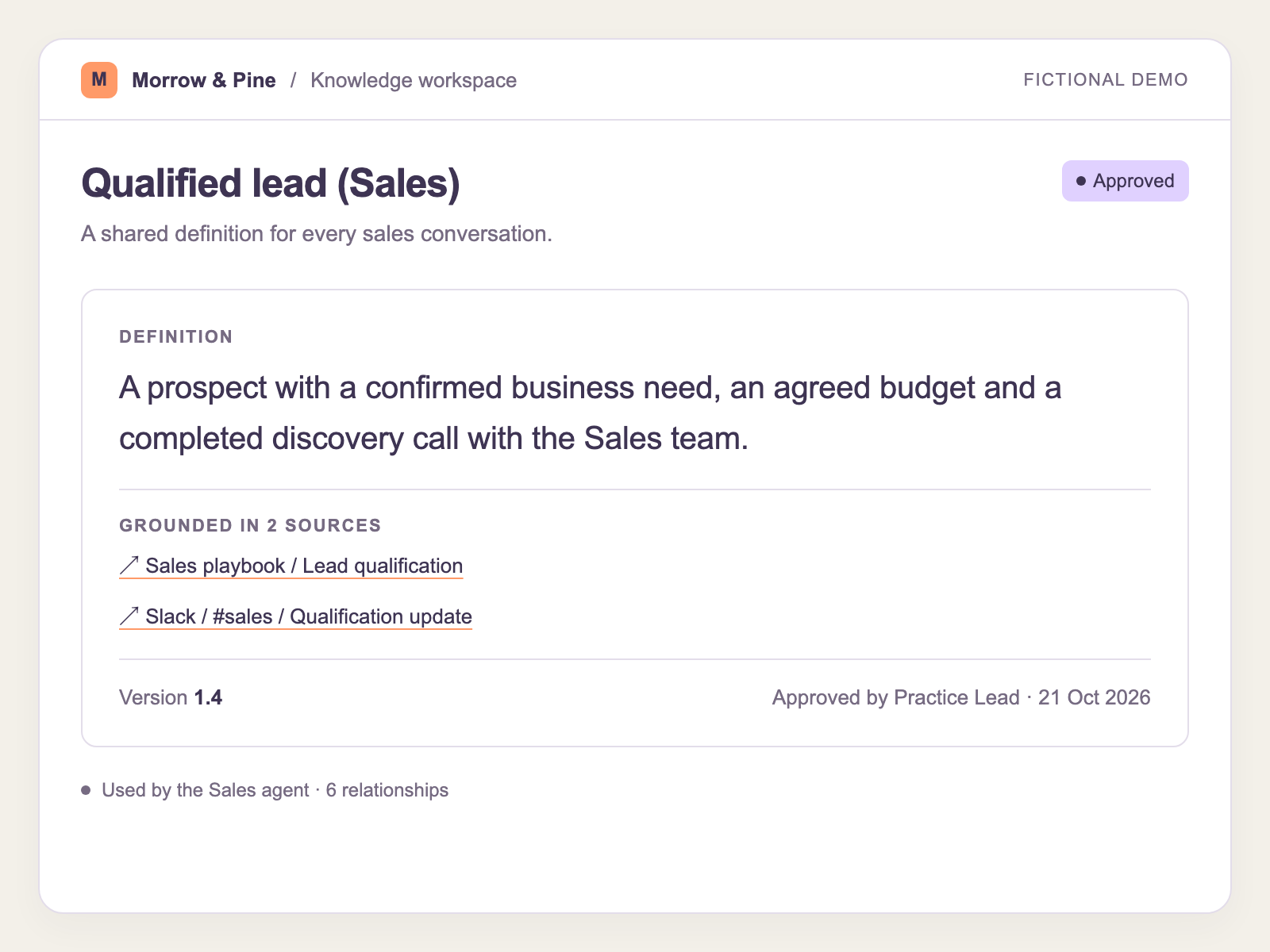
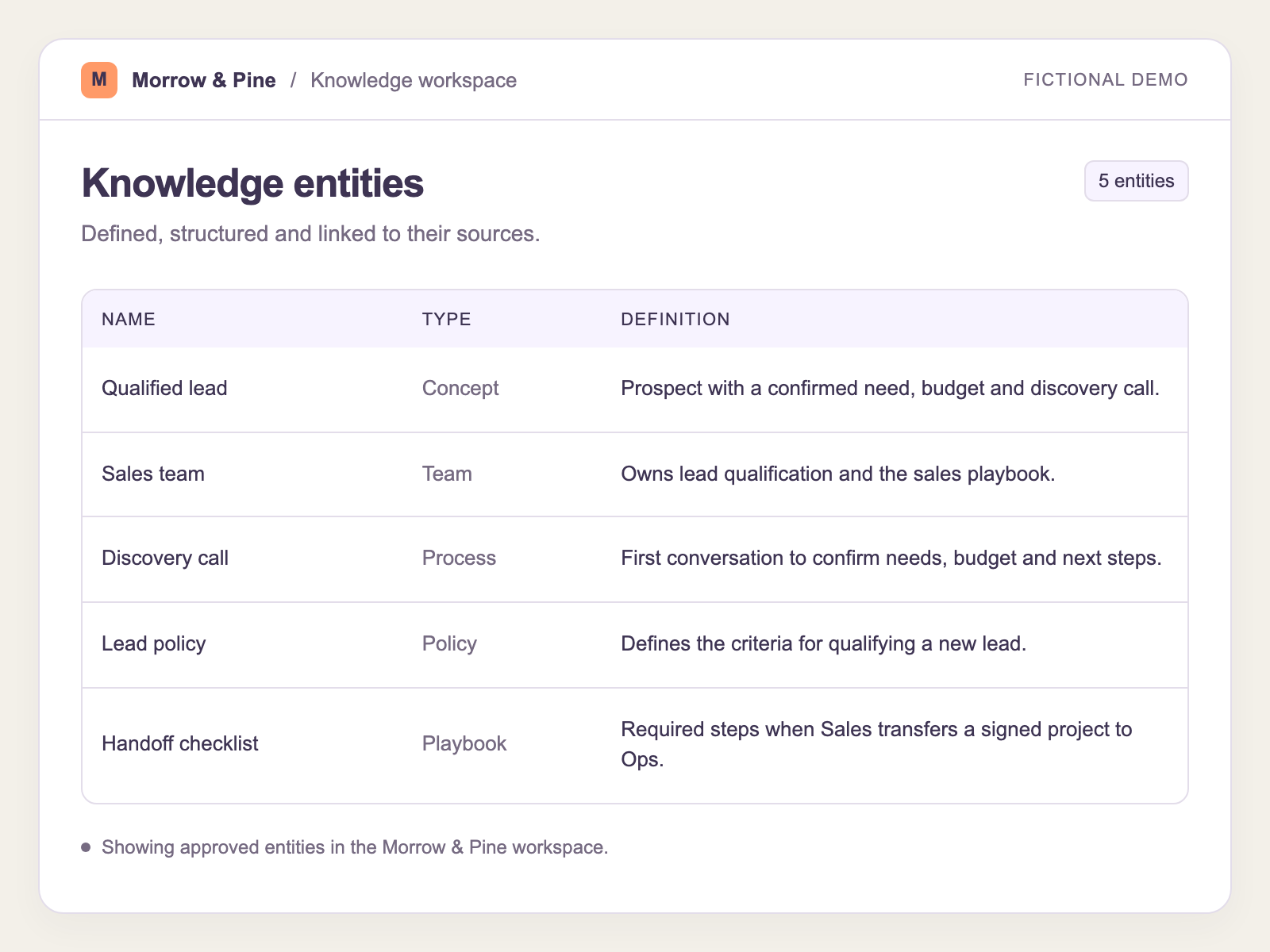
Every entity is queryable, typed, and versioned, designed for machine consumption from day one.
Your humans keep Notion. Your agents get Oiya.
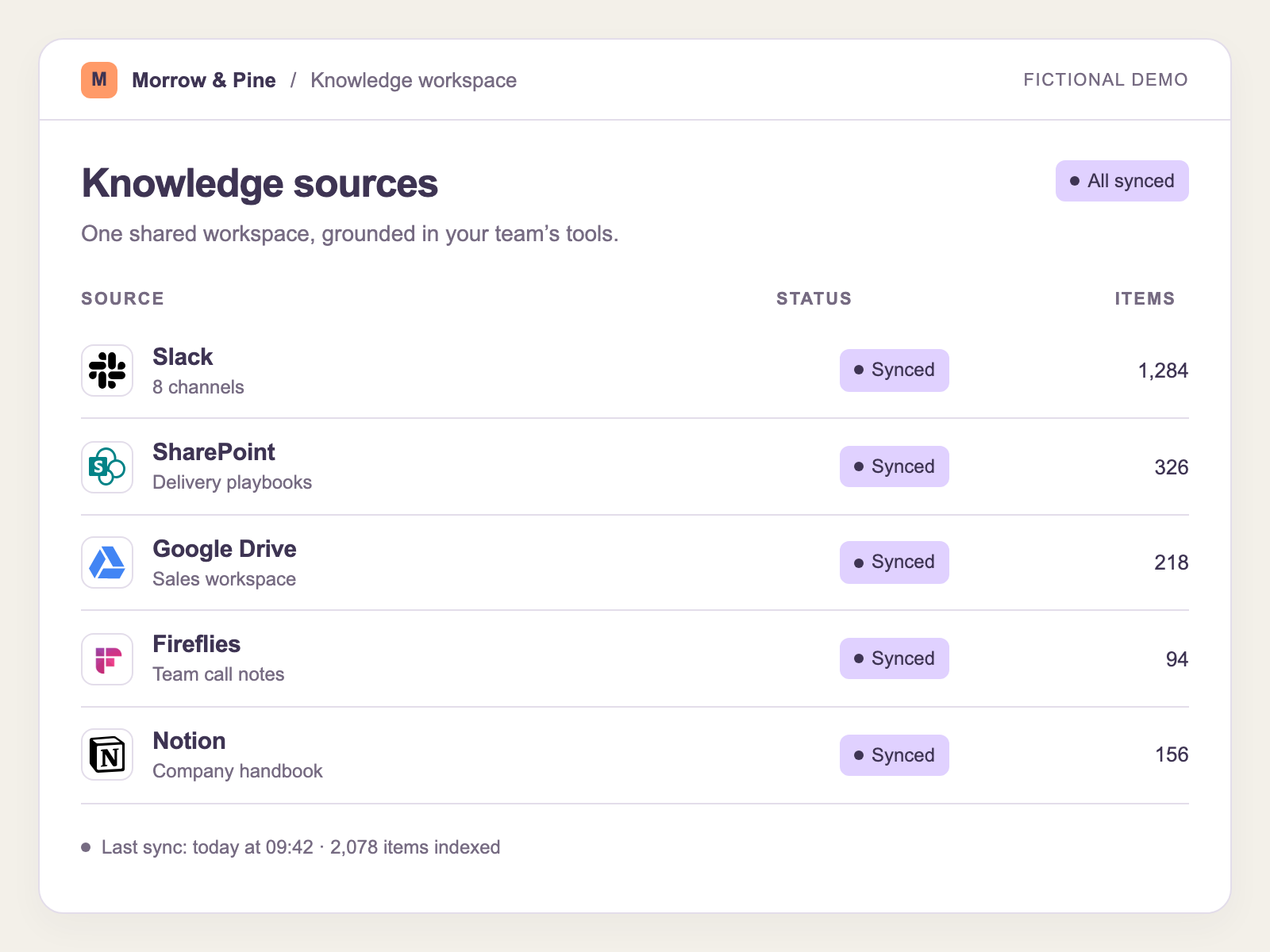
You don't have to migrate away from your existing knowledge base. Connect Notion, Confluence, Google Drive, or any other source, and Oiya will extract structured entities from your unstructured content. Your team keeps writing docs the way they always have. Your agents get a queryable, governed knowledge layer on top.
When someone updates a process doc in Notion, Oiya picks up the change, proposes updates to the relevant entities, and routes them through governance. Your agents stay current without anyone having to think about it.
Meet your team where they are. Serve your agents what they need.
Give your agents a knowledge base built for them.
Keep your wikis for humans. Let Oiya handle the agents.
For the wider picture, read what a company knowledge layer for AI agents is and why multi-agent systems need one.
More comparisons
vs RAG
RAG finds documents. Oiya understands your company.
vs Knowledge Graphs
Knowledge graphs that learn and evolve.
vs Mem0
Agent memory vs governed company knowledge.
vs Pinecone
Knowledge layer vs knowledge engine.
vs OpenAI Memory
Your knowledge. Your infrastructure.
Knowledge Management
See the full knowledge management platform.