Keep LLMs on-track
Your agents drift because their knowledge is unmanaged. Oiya gives you versioned, permissioned, observable memory infrastructure, so you can reason about what every agent knows and control what it doesn't.
The LLM reliability problem isn't the model
You're shipping agents into production. They're smart enough. The problem is what they know, or think they know. One agent has stale data about Acme Corp's contract terms. Another leaks HR compensation figures into a client-facing workflow. A third hallucinates a product feature because nobody told it what "qualified" actually means in your organisation.
Prompt engineering won't fix this. RAG gets you closer, but it's retrieval without governance. You can't version it, you can't permission it, you can't tell which agent saw which version of which fact. What you need is a knowledge layer that sits between your agents and your data, one that gives you the same controls you'd expect from any production system: versioning, access control, and audit trails.
That's what Oiya is. Not another vector store. Not another prompt library. A managed knowledge layer with engineering-grade controls.
Versioning
Memory you can rewind
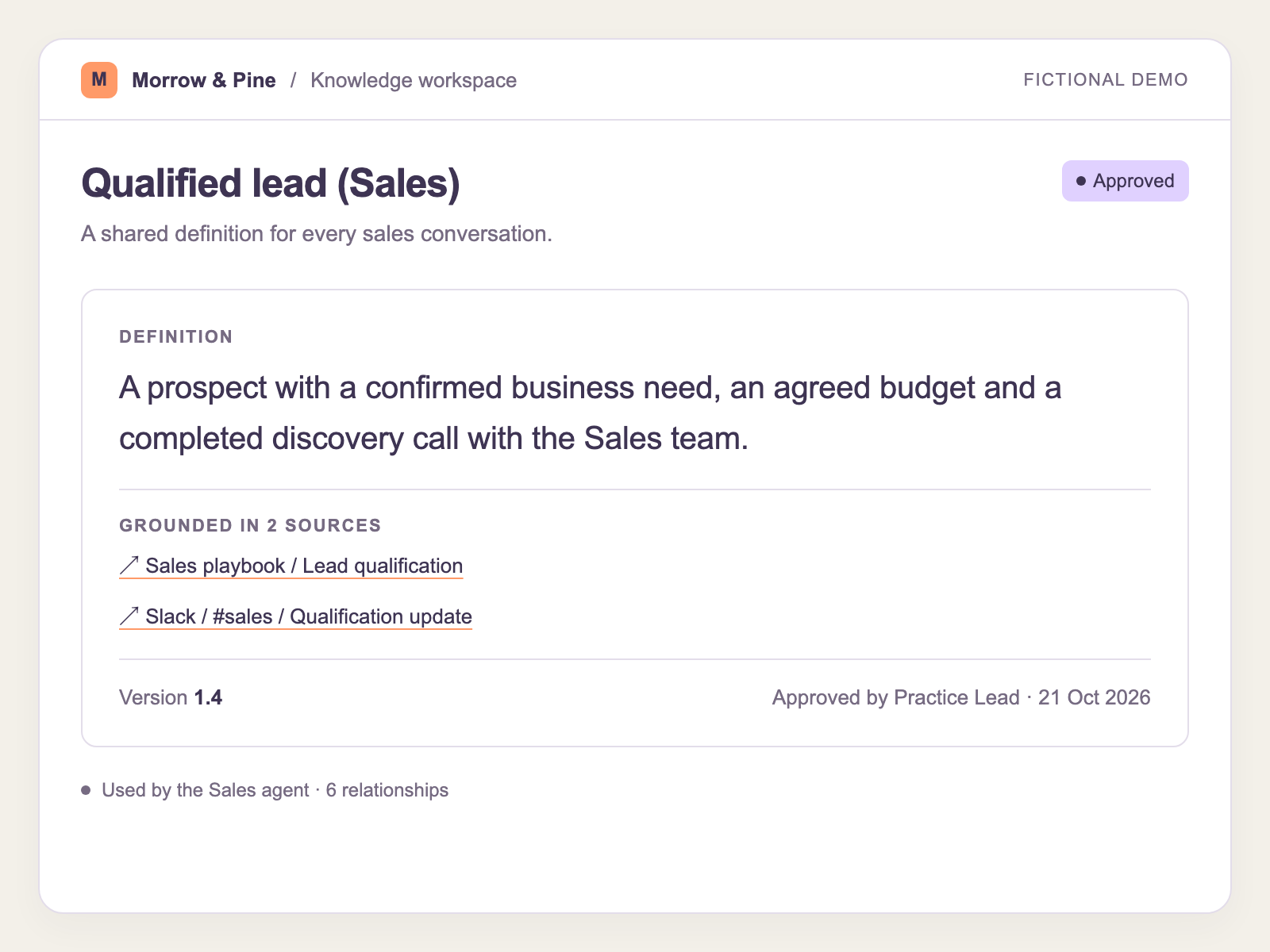
Every schema change, every new entity, every promoted assertion, tracked with full history. When your sales copilot starts telling prospects about a pricing tier you deprecated last quarter, you don't guess what happened. You open the version log, see exactly what changed and when, and roll back to a known-good state.
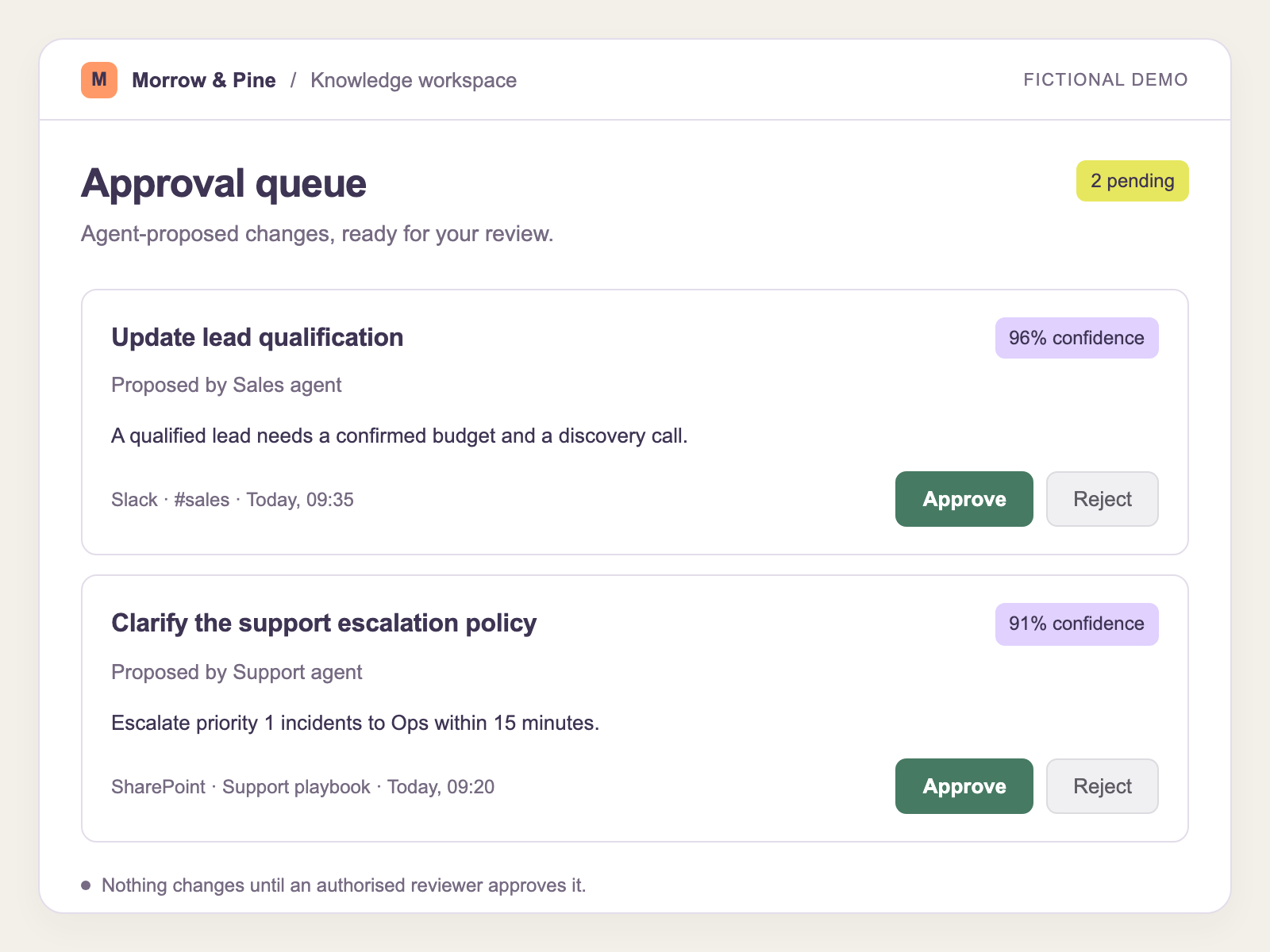
Changes flow through a proposal system. High-confidence, low-sensitivity updates auto-merge. Structural changes (new entity types, schema modifications) queue for human review. You set the thresholds. The system version-stamps every accepted batch, so you can compare any two snapshots of your knowledge base side by side.
Git for what your agents know.
Investigate
See what every agent sees
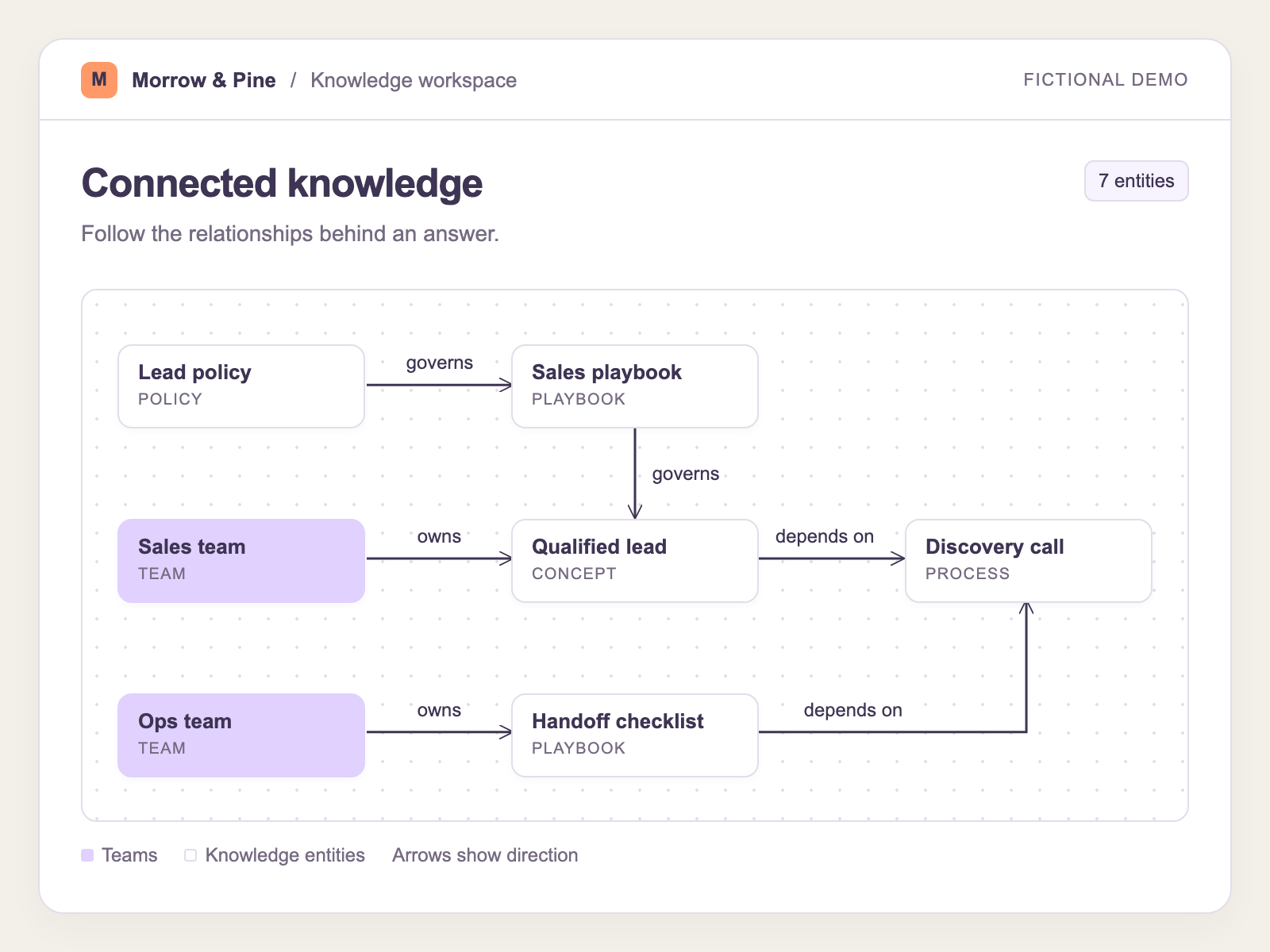
Your BD agent reads from Core and Client: Retail. Your HR agent is scoped to HR Core. Claude gets the default partition. Each agent has a different view of the knowledge base, and when something goes wrong, you need to understand exactly what that view contains. Not the model's interpretation. The actual facts it was given.
Oiya lets you inspect any agent's memory base directly. Browse the domain partitions it has access to, see the concepts and entities in scope, check the token budget it consumes. Switch between card, graph, and table views to understand the relationships. When two agents disagree about what "delivery SLA" means, you'll see the divergence in their partitions, not in a debugging session three hours later.
Debug the knowledge, not the prompt.
Permissioning
The graph reshapes around constraints
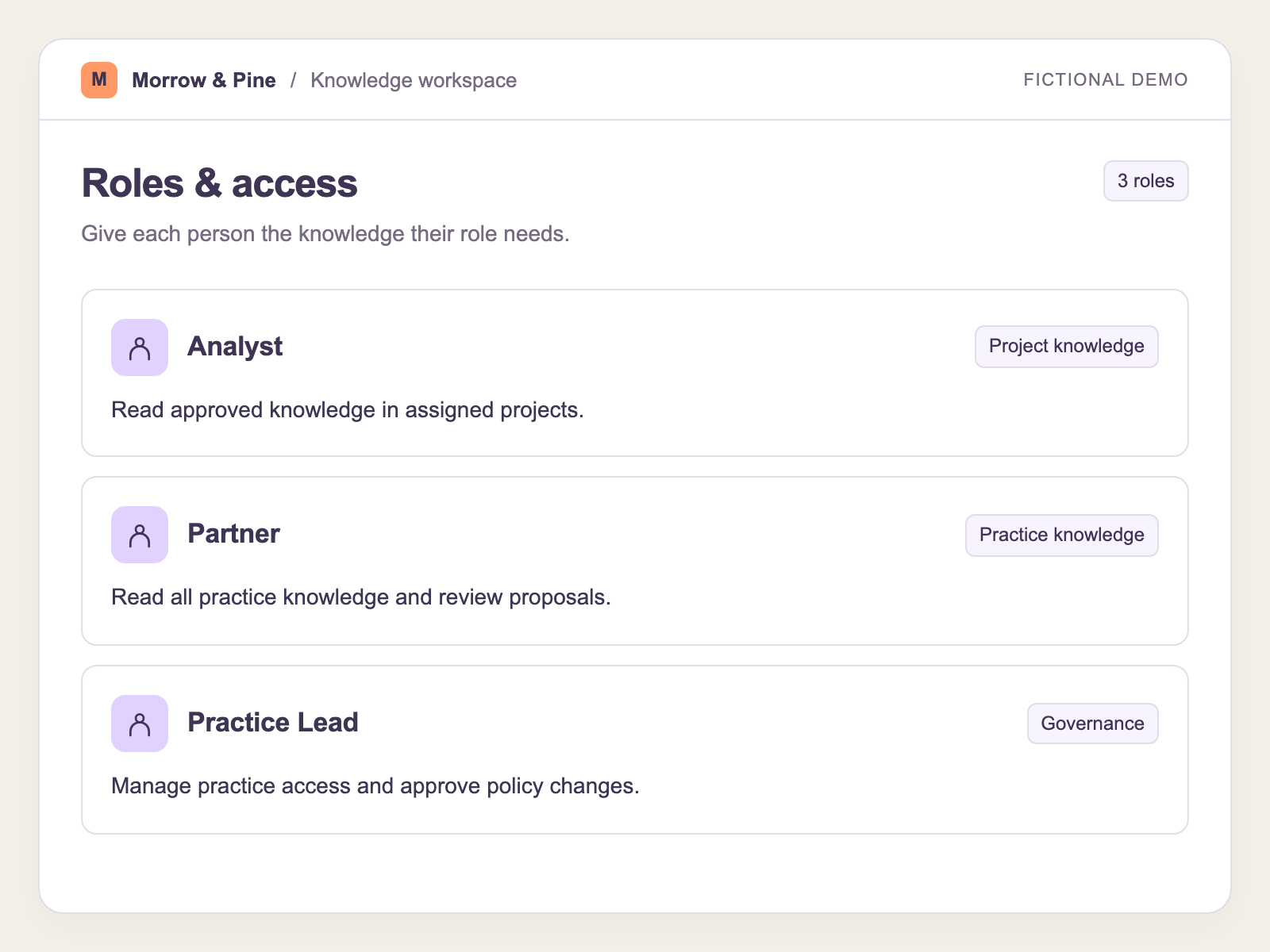
Concepts are permissioned. Not prompt-guarded, not filtered after the fact, but structurally permissioned at the knowledge layer. You specify deterministically what each agent can and cannot see, and the graph itself reshapes around those constraints. Your HR agent sees compensation data. Your BD agent doesn't. The boundary isn't a system prompt instruction the model might ignore. It's infrastructure.
Define roles with partition-scoped access: read-only for some, write access for others, spine-level control for the core ontology. Assign agents to partitions. The permissioning model means the knowledge graph each agent receives is already filtered. There's no "please don't mention salaries" in the prompt. The data simply isn't there.
Access control that doesn't depend on the model's cooperation.
Enforcement
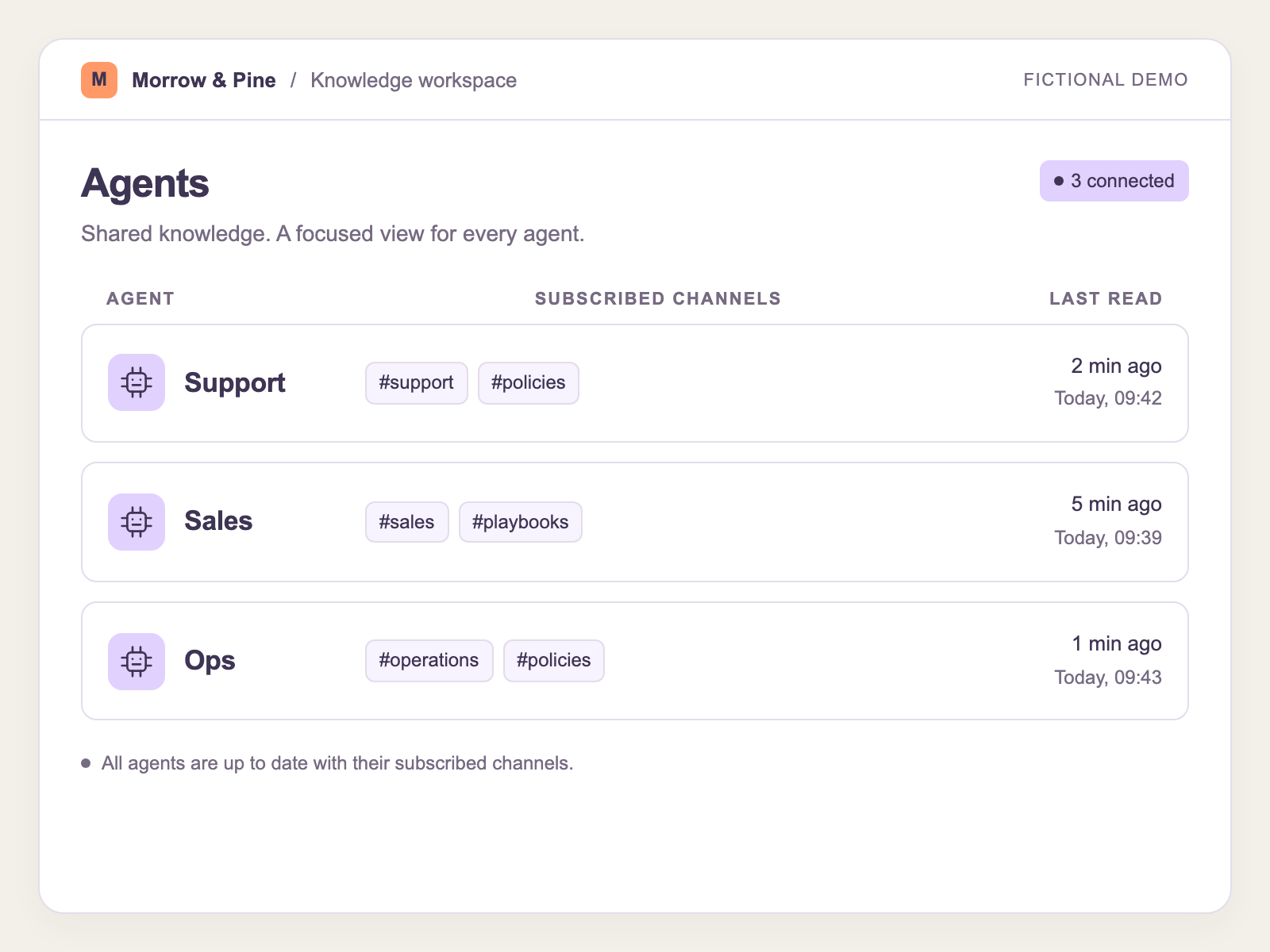
Every agent, accounted for
Register each agent with its role, its partition assignments, and its permission level. The BD Agent reads from Core and Client: Retail with scoped access. The Ops Agent gets read-only across Finance. Claude is assigned the default partition. None of them can approve their own proposals. That's either a human decision or an auto-approval rule you've configured with clear thresholds.
This isn't just an inventory. It's the enforcement point. When your support agent queries the knowledge graph for placement metrics, it either has access to that partition or it doesn't. The answer doesn't depend on how clever the prompt is. It depends on the partition assignment you made, which is versioned, auditable, and changeable without redeploying anything.
Guided, not magic.
Human-in-the-loop, not human-in-the-way
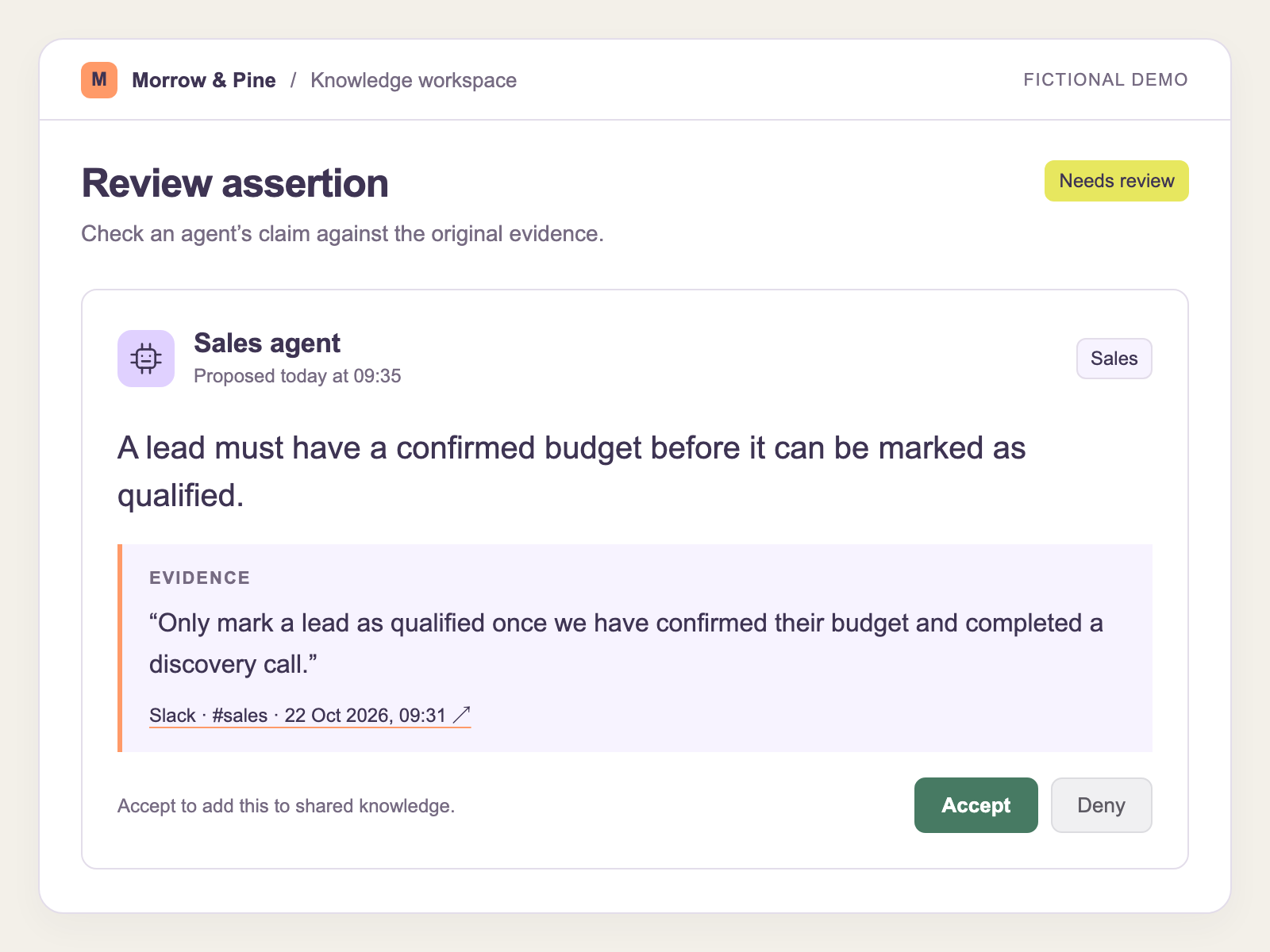
Every assertion an agent proposes surfaces with evidence, attribution, and confidence. When the Sales Copilot detects via a CRM sync that Acme Corp's primary contact changed, that fact doesn't silently become company knowledge. It enters a review queue where you see the source, the proposer, and the downstream impact. Accept, deny, or promote. Your call.
The system learns from your decisions, not around them. Over time, auto-approval thresholds handle the routine updates while structural changes and sensitive assertions still require human sign-off. Governance that works because it's part of the workflow, not a gate you bolt on after the fact.
Your agents are only as reliable as their knowledge layer
Give them versioned, permissioned, observable memory, and stop debugging prompts when the problem is the data.
Explore more
For Platform Engineers
The control plane for agent memory.
For Business Leaders
Distributed knowledge for every AI agent.
Knowledge Management
Versioned, governed, observable memory infrastructure.
vs RAG
RAG finds documents. Oiya understands your company.
Product Overview
See the full picture of what Oiya does.