Distributed knowledge for every AI agent
Build the memory infrastructure that keeps your agents aligned. Versioned, governed, observable.
Every agent has its own version of the truth
You're deploying AI agents across the company. Each team builds their own. Each agent develops its own understanding of the company: different definitions, different sources, different versions of the truth. Your BD agent thinks "qualified" means one thing. Your support agent thinks it means another. Neither is wrong, exactly. They just never agreed.
You need infrastructure that gives every agent access to shared context, lets teams customise without fragmenting, keeps humans in control of sensitive knowledge, and scales from prototype to production.
Oiya is that infrastructure. A single knowledge layer that your agents read from and write to, with versioning, governance, and observability built in from day one.
What Oiya gives you
Guided, not magic. Four capabilities that turn agent memory from a liability into infrastructure.
Versioning
Investigate different agent memory states and understand how they affect behaviour. When your sales copilot starts giving wrong answers about Acme Corp's contract terms, you can see exactly what changed, when, and roll back to a known-good state.
Every schema change, every new entity, every promoted fact, tracked with full history. Compare versions side by side. Understand drift before it becomes a problem.
Observability
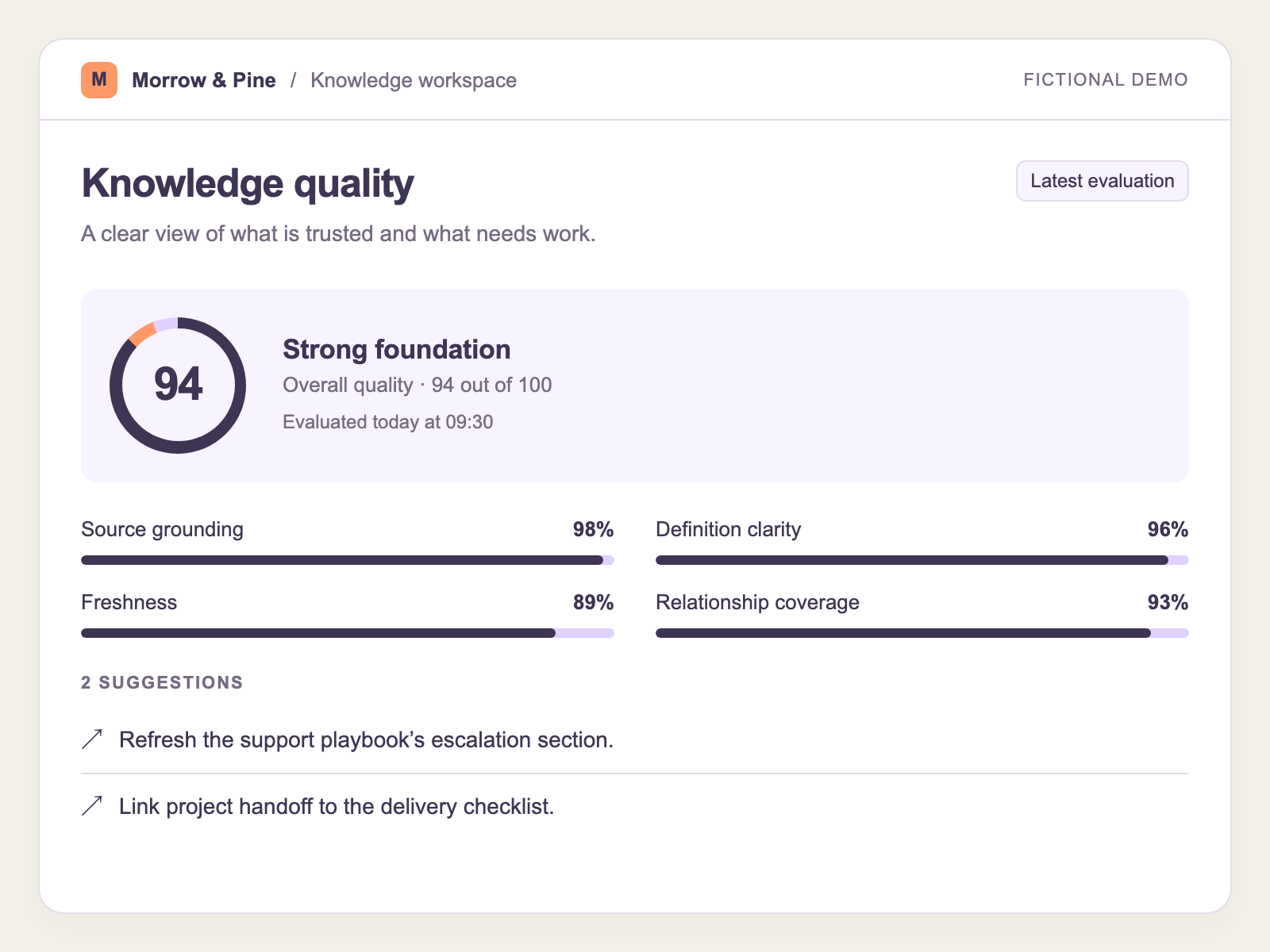
See what your agents know, what they're querying, what they're proposing. Evals are baked in: quality metrics for your knowledge across eight dimensions, from extractability to safety.
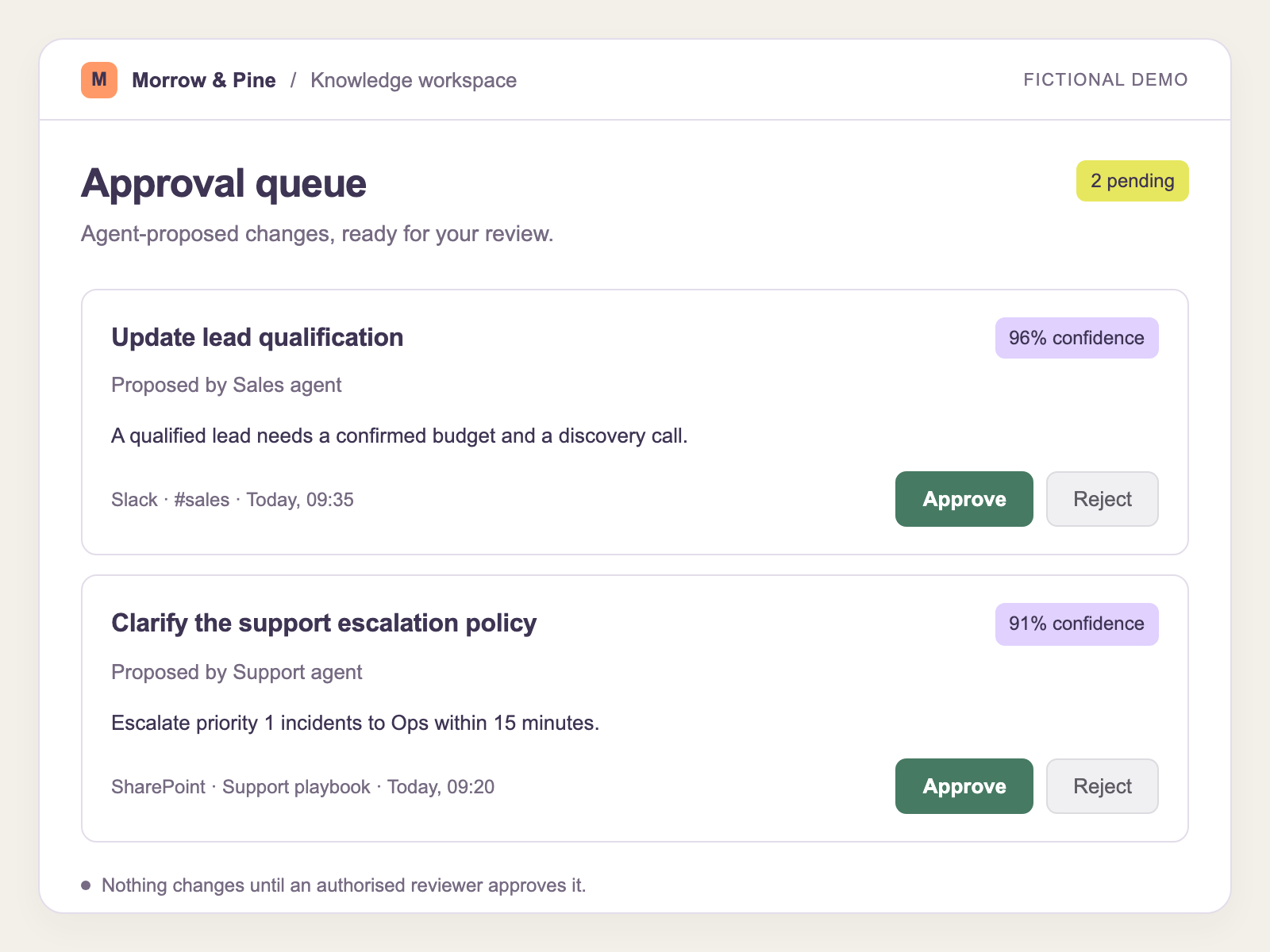
When an agent proposes a change, you see the evidence, the confidence score, and the impact. No more wondering why an agent said something. The reasoning is right there.
Governance
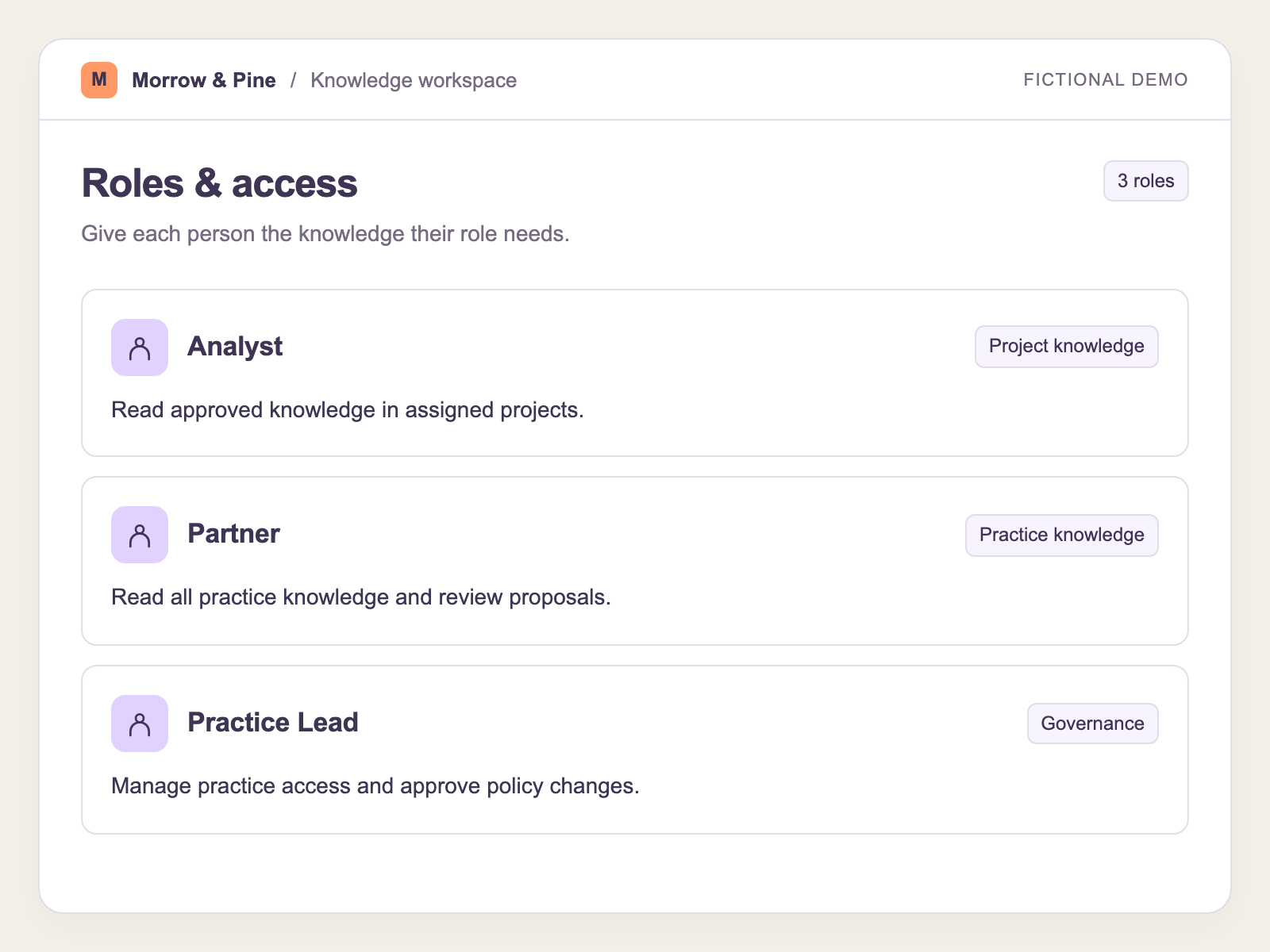
Concepts are permissioned. You specify deterministically what each agent can and cannot see. The graph reshapes itself around those constraints. Your HR agent sees compensation data. Your BD agent doesn't. Not through prompt engineering. Through infrastructure.
Roles, partitions, audit trails, source-level access control. Human review for sensitive assertions. Governance that works because it's structural, not aspirational.
Deploy where the data has to stay
Enterprise search products need continuous live connections into every source system they query. Oiya is a system of record for company knowledge, so it does not require standing outbound access from sensitive systems to a vendor at query time.
That is what makes Oiya deployable on-premises, in customer VPCs and in sovereign environments where a continuously-connected product is not permitted, including a signed public-sector deployment with strict data-residency requirements.
Security and deployment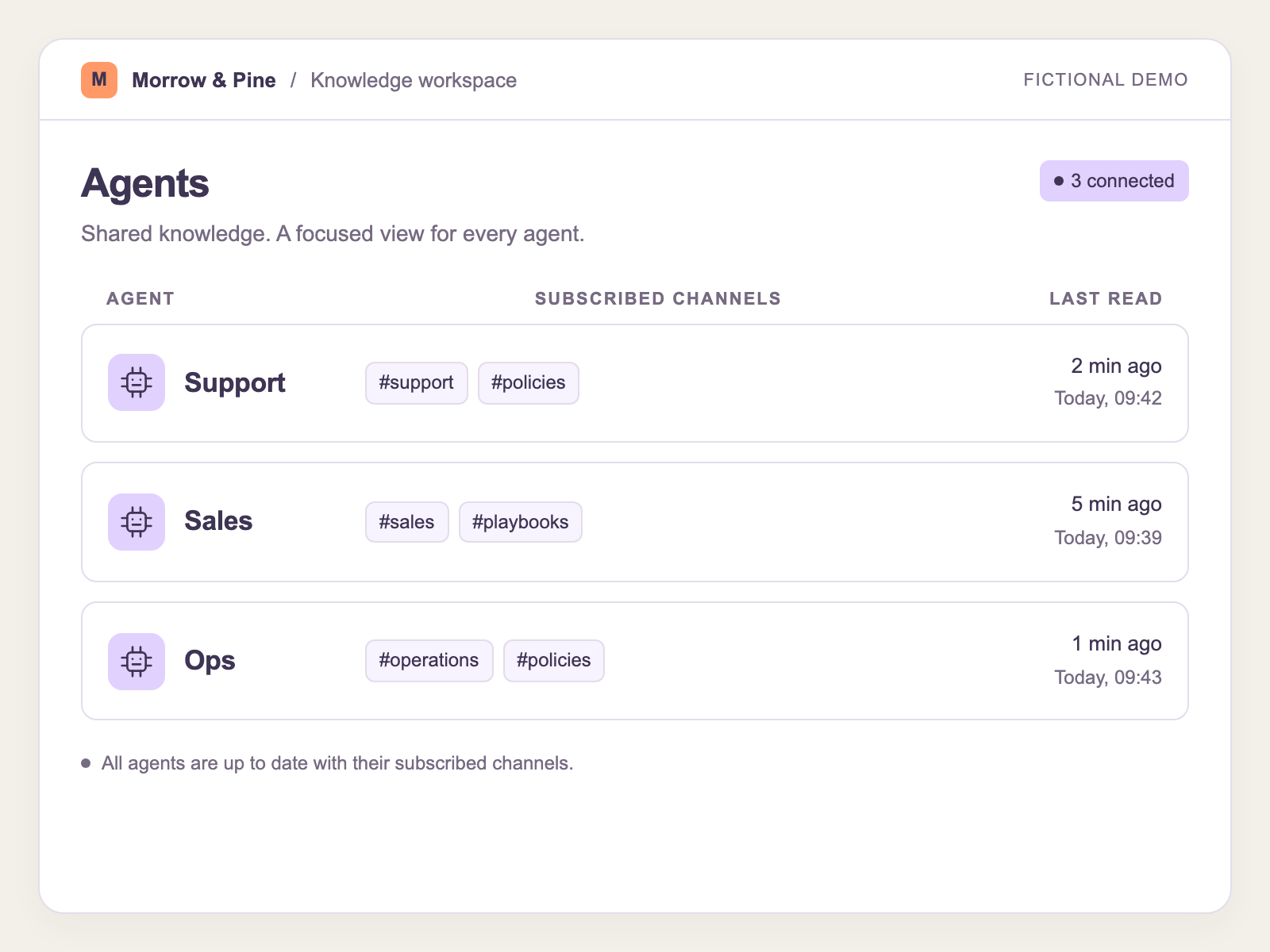
Scale
From a single agent to thousands. Partition by team, by client, by domain. Shard as you grow. Each agent gets its own view of the knowledge base, scoped, permissioned, and consistent with the whole.
Your BD agent sees client data for retail. Your ops agent sees finance. They both agree on what "delivery SLA" means because the definition lives in the spine, not in a prompt.
For platform engineering teams
You're building agent infrastructure for the whole company. Oiya is your knowledge layer.
Single deployment
One knowledge server, many partitions. A Go backend with an API, CLI, and web interface. Deploy once. Let every team connect.
Team self-service
Teams manage their own partitions within your governance framework. They can connect sources, teach concepts, and register agents, without needing platform team tickets.
Central oversight
See all knowledge, all versions, all activity across every partition. Audit logs enabled by default. Quality scores calculated continuously.
Simple architecture
Go server, REST API, CLI tooling, web dashboard. No graph database to operate. No vector store to tune. SQLite in development, Postgres in production.
Build once, let teams build on top.
Human-in-the-loop, not human-in-the-way
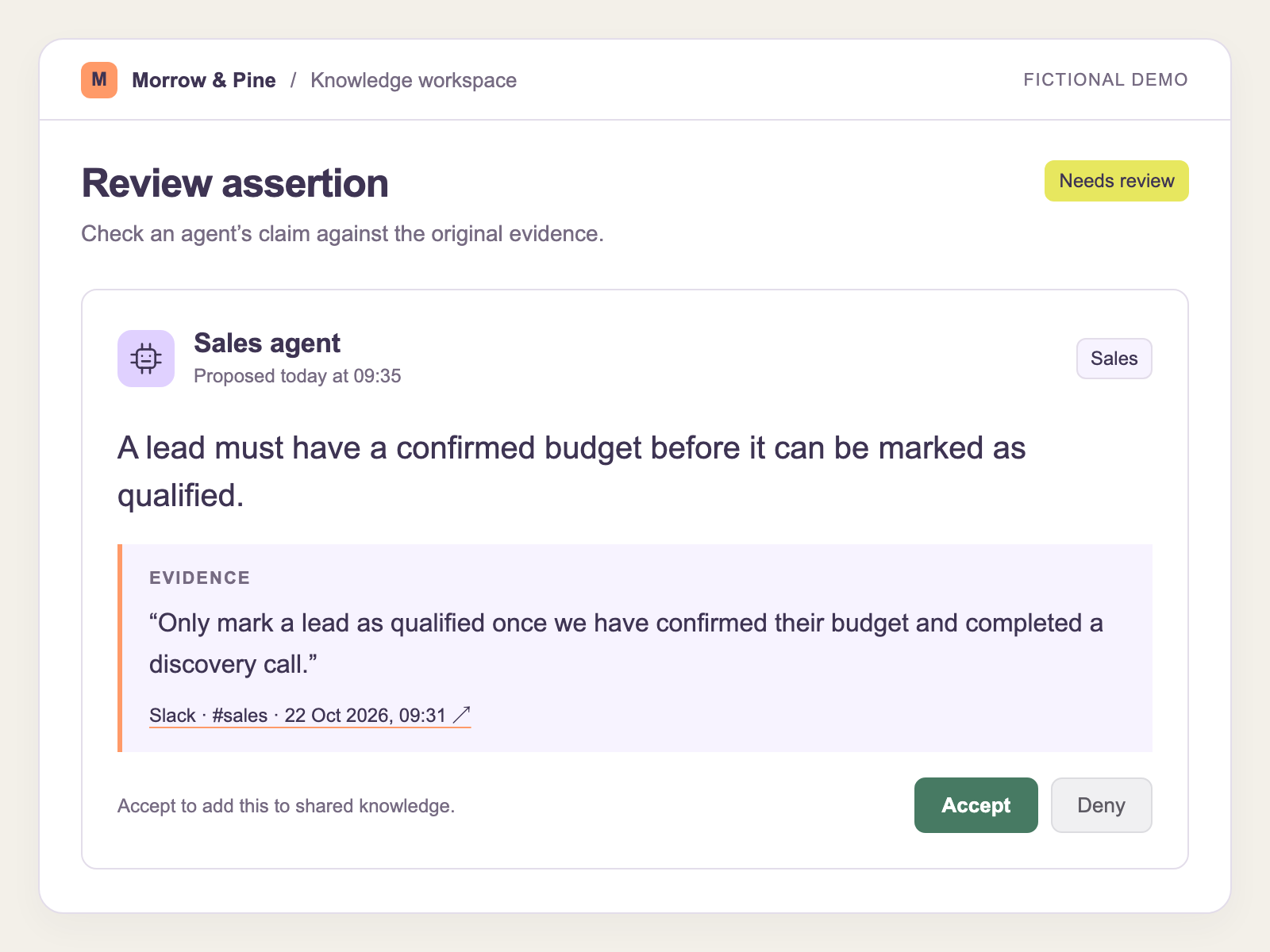
Every change an agent proposes is surfaced with evidence, attribution, and confidence. Accept, deny, or promote. It's your call. The system learns from your decisions, not around them.
When the Sales Copilot detects that Acme Corp's primary contact has changed via a CRM sync, that assertion goes through review before it becomes company knowledge. You see the source, the proposer, and the impact. Governance that actually works because it's part of the workflow, not a gate in front of it.
Your agents are only as good as what they know
Give them shared, governed, versioned knowledge, and see what happens when every agent in your company finally agrees.