Connect to everything your team already uses.
Oiya reads your data where it lives: documents, databases, CRMs, meeting transcripts, websites. No migration. No copying. Your agents get structured context from every source that matters.
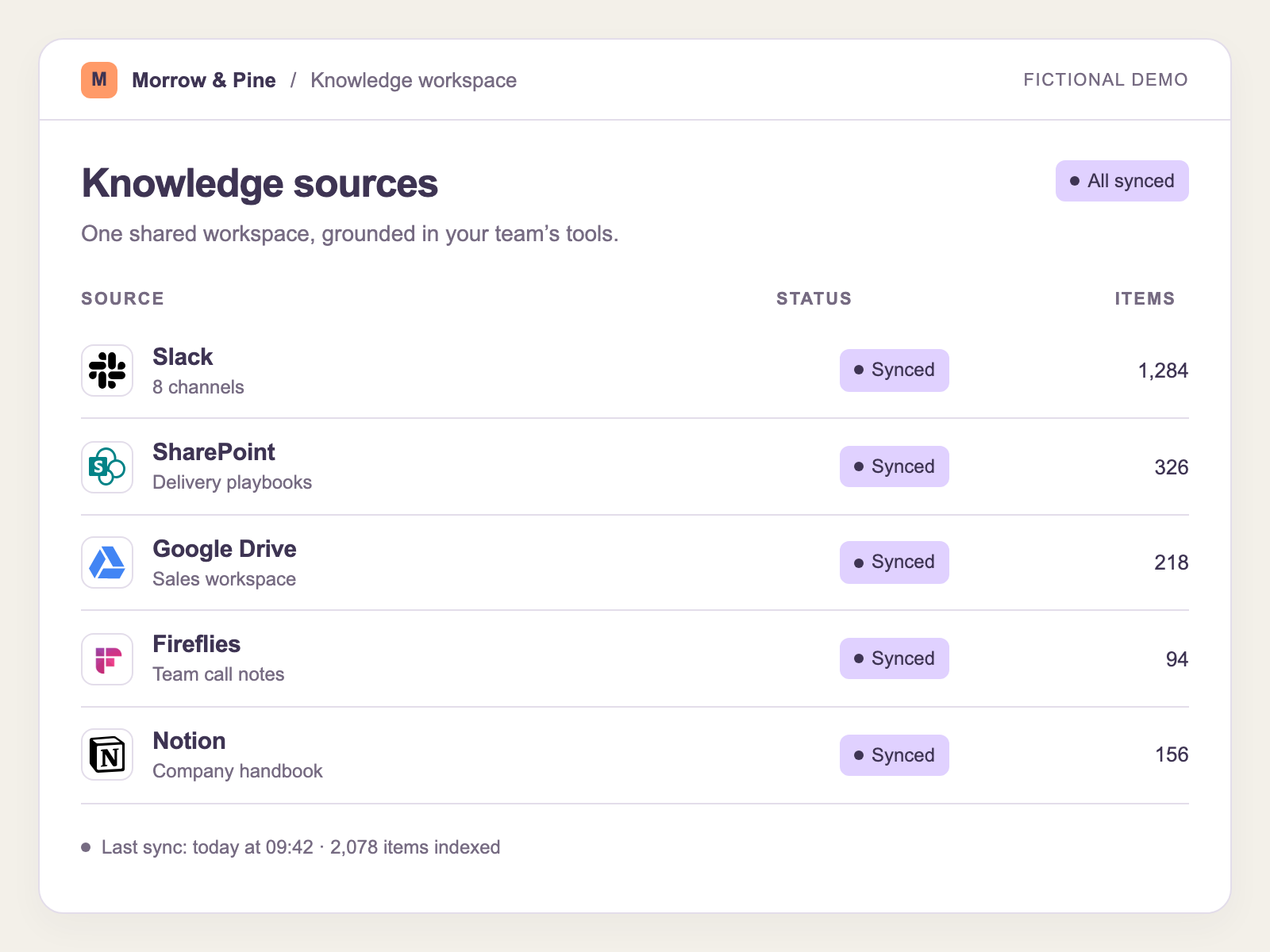
One layer, every source
Oiya isn't picky about where knowledge comes from. Documents, databases, live APIs, agent outputs. They all feed the same structured model. Filter by category to find what you need.
Google Drive
Ingest documents, spreadsheets, and presentations from shared drives. Oiya watches for changes and re-indexes automatically.
Google Sheets
Pull structured data from spreadsheets (candidate search archives, planning docs, tracker sheets) into queryable knowledge.
Notion
Connect workspaces, databases, and pages. Oiya reads your team's living documentation and keeps the ontology in sync.
Confluence
Index your Confluence spaces (process docs, runbooks, project pages) without asking anyone to change how they write.
SharePoint
Connect to SharePoint document libraries and sites. Enterprise file storage, structured and searchable by your agents.
Manual Uploads
Drop in PDFs, Word docs, or text files directly. Useful for client discovery notes, market briefings, or one-off research.
HubSpot
Sync accounts, contacts, and deal pipelines. Your agents get CRM context without anyone copy-pasting from the sidebar.
Salesforce
Pull account hierarchies, opportunity data, and activity logs into the knowledge graph. CRM data becomes structured context.
Jira
Ingest product updates, project tickets, and sprint data. Oiya maps Jira artifacts to the concepts they relate to.
Airtable
Connect research ops bases, content calendars, or any structured workspace. Airtable's flexibility meets Oiya's structure.
Snowflake
Query placement metrics, revenue data, or any analytics warehouse. SQL sources feed directly into the knowledge model.
PostgreSQL
Connect to operational databases. Oiya reads the tables you point it at and maps them to your ontology schema.
SQL Databases
Generic SQL connector for MySQL, MSSQL, and other relational databases. Compensation benchmarks, role data, whatever you store.
Meeting Transcripts
Feed in call recordings and meeting notes. Oiya extracts entities, decisions, and context changes, not just keywords.
Slack
Ingest channel conversations and threads. Surface decisions buried in chat history as structured, queryable knowledge.
Connect email feeds for client communications and internal updates. Oiya respects access boundaries. Agents only see what they should.
OpenAI Agents SDK
Register agents built with the OpenAI Agents SDK. Oiya handles partition assignment, schema access, and permission scoping.
LangChain / LangGraph
Connect LangChain or LangGraph agents to the shared knowledge layer. Query context mid-chain, propose learnings on completion.
Claude / Anthropic
Integrate Claude-based assistants with the ontology API. Same structured context, same governance, regardless of model provider.
smolagents
Lightweight agents from Hugging Face get the same knowledge access as heavyweight orchestrations. No special treatment needed.
Custom Agents (REST API)
Any agent that speaks HTTP can query the ontology, propose updates, and respect partition boundaries. Bring your own stack.
Website Crawler
Point Oiya at a URL and it extracts entities, relationships, and context using Playwright-rendered pages. JavaScript-heavy sites included.
Ingest company profiles and post history. Competitive intelligence and market context, structured and agent-ready.
Webhooks
Receive real-time payloads from any system (Jira, GitHub, Stripe, custom apps). Oiya classifies and routes them to the right concepts.
Power BI
Connect BI dashboards to ontology-grounded data. Agents that understand your metrics can answer questions about what the numbers mean.
Looker
Bridge the gap between your semantic layer and your knowledge graph. Definitions stay consistent across analytics and AI.
Connection Governance
Connected doesn't mean uncontrolled
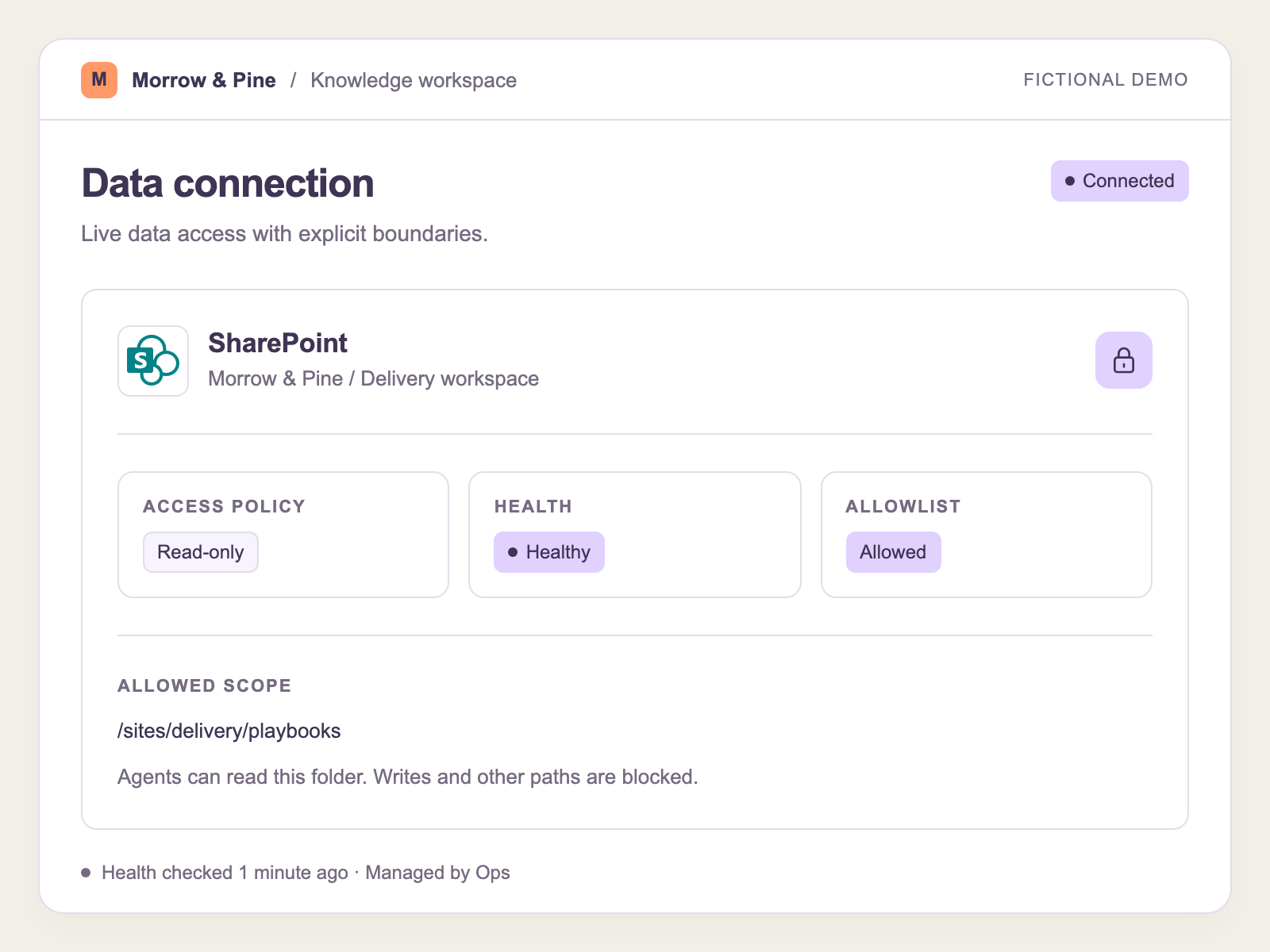
Every integration gets its own access policy. Some connections are allowlisted. They can feed knowledge into the ontology freely. Others are read-only, meaning agents can query the data but it won't update the model. And some are blocked entirely, visible for audit purposes but not active.
You set these policies per connection, and Oiya enforces them consistently. When a new data source comes online, it starts restricted until someone with the right role opens it up. No surprises, no silent data leaks.
Every pipe has a valve.
Agent Frameworks
Your agents, any framework
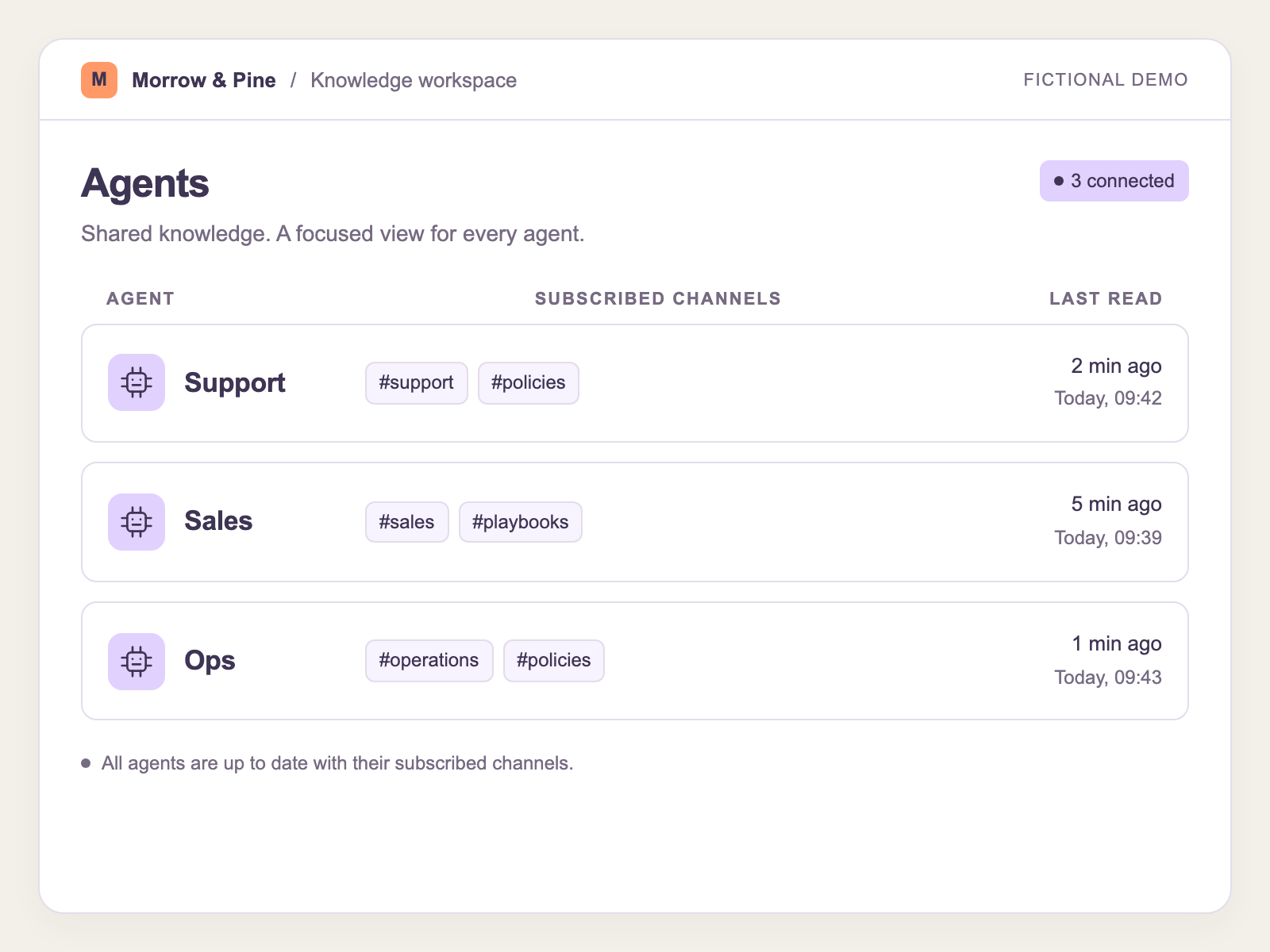
Oiya doesn't care how you built your agent. OpenAI Agents SDK, LangGraph, smolagents, a custom Python script that calls an API. If it can make an HTTP request, it can query the ontology and propose new knowledge.
Every agent gets registered with its own identity, partition assignments, and permission boundaries. A BD agent reads from Core and Client: Retail. An HR copilot gets read-only on HR Core. Permissions follow the agent, not the prompt, so you can swap models or frameworks without rethinking access control.
Whichever framework a team picks, it queries the same governed knowledge graph through the same interfaces, so entities, definitions and relationships stay consistent across stacks.
One knowledge layer, every agent framework.
Structured Output
From scattered sources to structured understanding
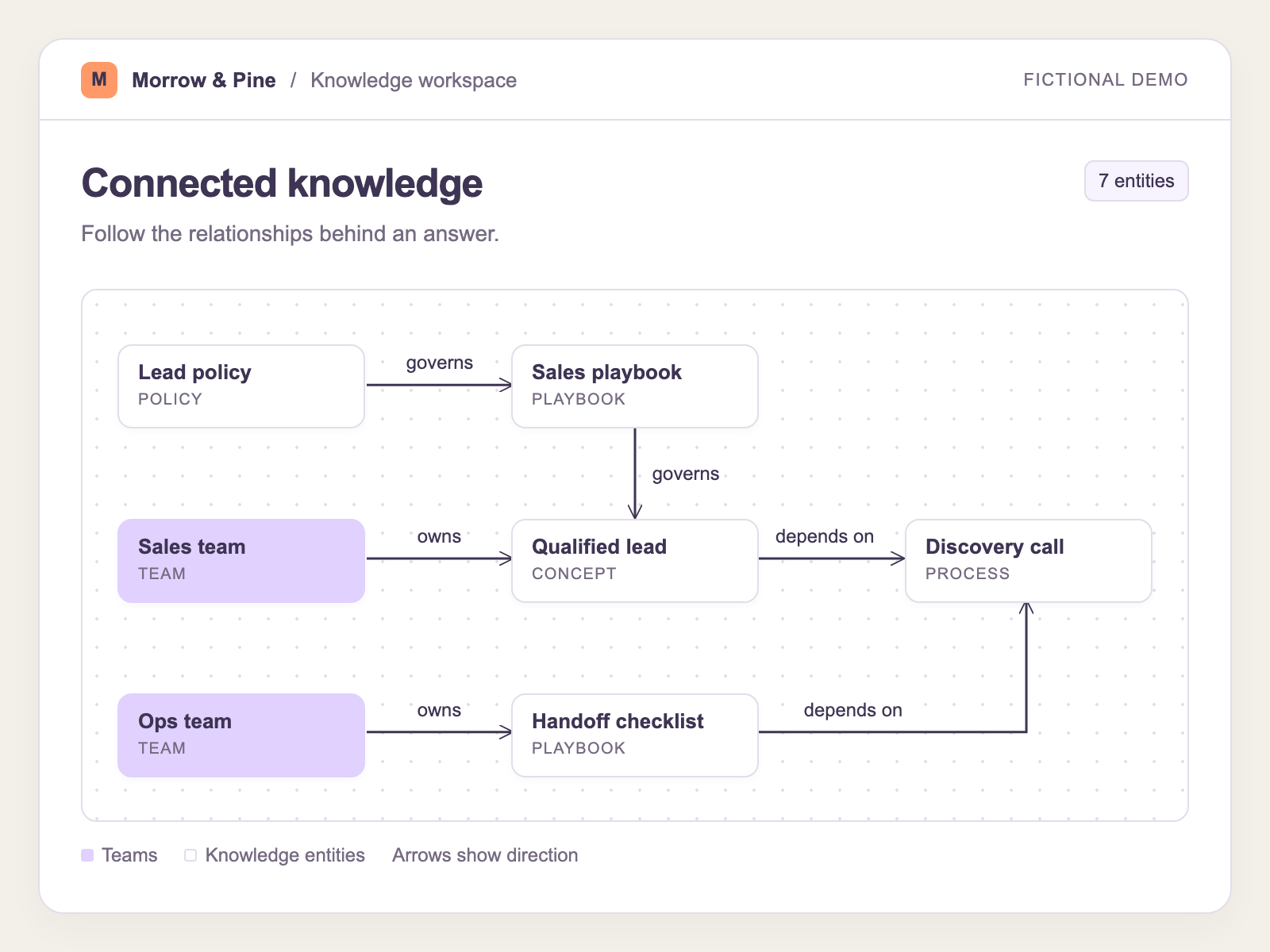
Plug in a Google Drive folder full of client notes, a Jira board, and a few meeting transcripts. What comes out the other side isn't a pile of embeddings. It's a structured knowledge graph with typed entities, real relationships, and clear provenance back to the source material.
Your agents don't search through documents. They query a model that already understands what "Project Atlas" is, who's involved, which client it serves, and what workflow it follows. The integrations feed the graph. The graph feeds your agents. The agents feed it back.
Context that compounds.
Bring your stack. We'll bring the structure.
See how Oiya connects to the tools your team already uses and turns scattered data into shared, queryable knowledge.