Distributed knowledge for every AI agent.
Build the memory infrastructure that keeps your agents aligned. Versioned, governed, observable.
The problem you're solving
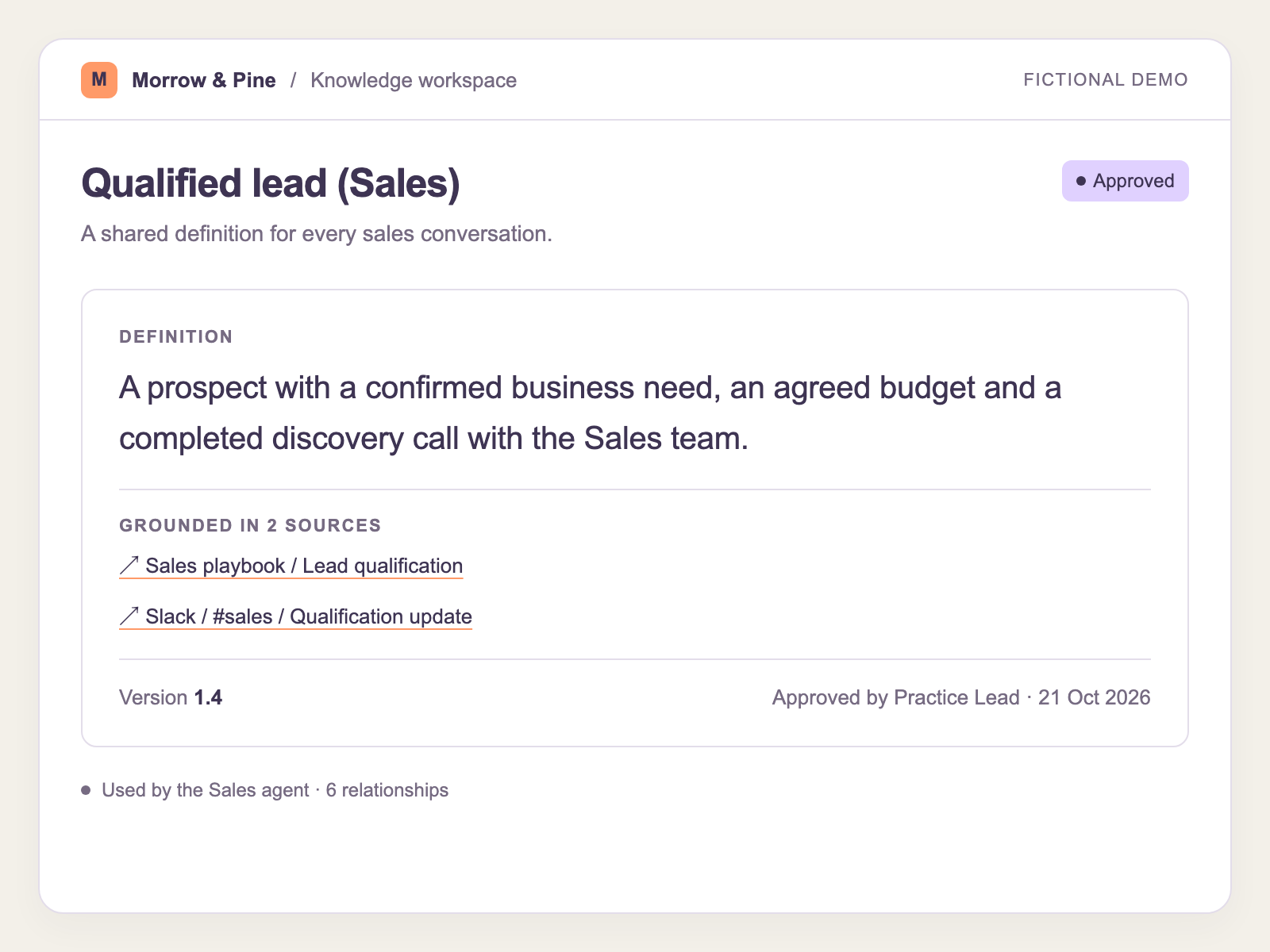
You're deploying AI agents across the company. Each team builds their own. Each agent develops its own understanding of the company: different definitions, different sources, different versions of the truth.
You need infrastructure that:
- •Gives every agent access to shared context
- •Lets teams customise without fragmenting
- •Keeps humans in control of sensitive knowledge
- •Scales from prototype to production
What Oiya gives you
Not another knowledge base. An operating layer for agent memory.
Versioning
Investigate different agent memory states and understand how they affect behaviour. Roll back when something breaks. Every schema change is tracked, every entity edit is auditable.
Observability
See what your agents know, what they're querying, what they're proposing. Quality metrics baked in: eight dimensions of ontology health, scored and actionable.
Governance
Concepts are permissioned. You specify deterministically what each agent can and cannot see. The graph changes around those constraints, not the other way around.
Scale
From a single agent to thousands. Partition by team, by client, by domain. Shard as you grow. One schema, many views. Each agent sees exactly what it should.
Easy Knowledge Management
Meet Marty, your ontology manager
You shouldn't need a knowledge engineer to keep your agents informed. Marty handles the heavy lifting: mapping new agents to the right partitions, assigning schema access, and configuring what each agent can read, write, and propose.
Point Marty at a new agent and tell it what the agent does. Marty will suggest the right knowledge partitions, set sensible defaults for schema access, and walk you through the rest. Guided, not magic.
Onboarding an agent takes minutes, not sprints.
Continuous Learning
Your agents learn. You stay in control.
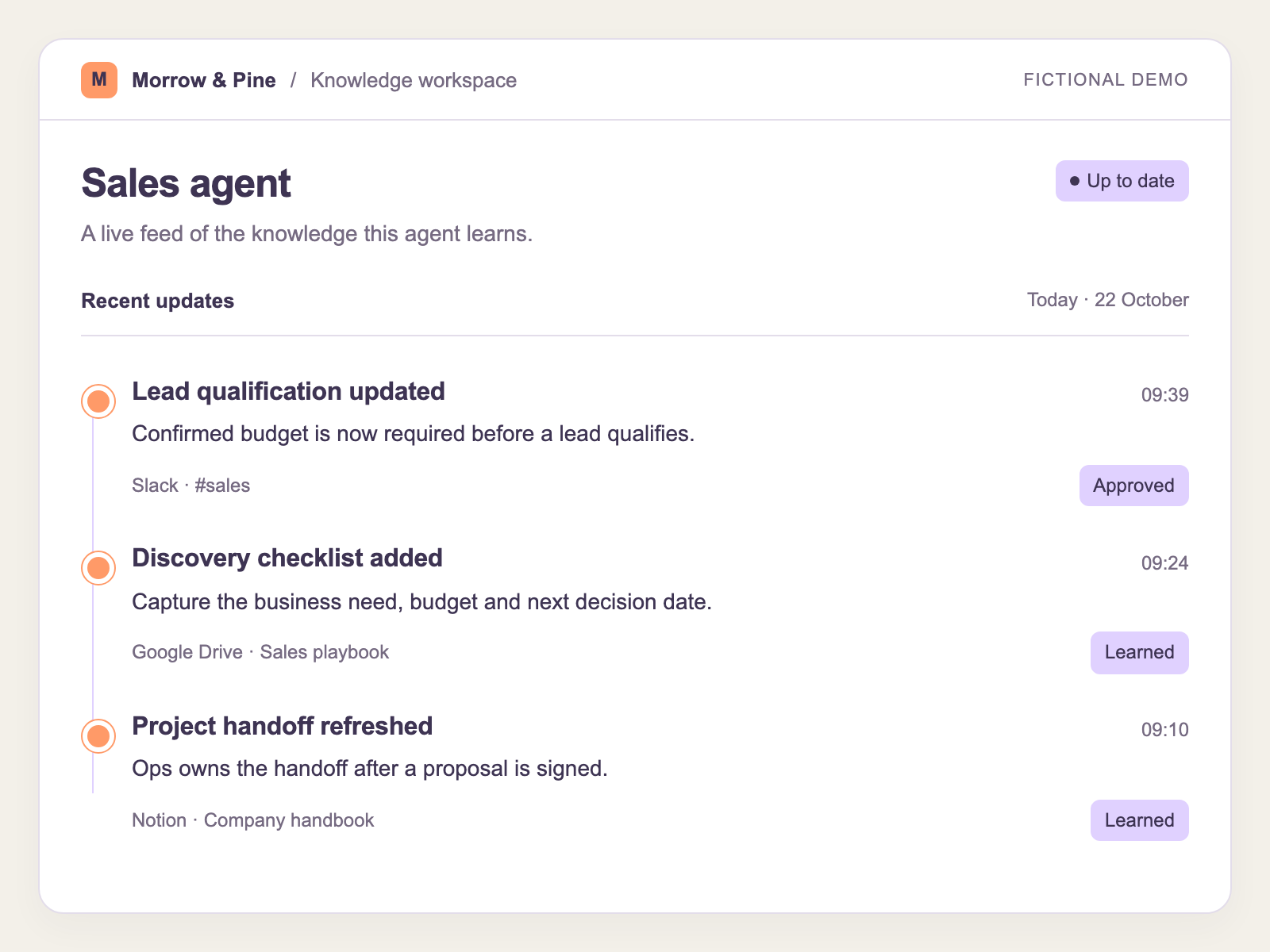
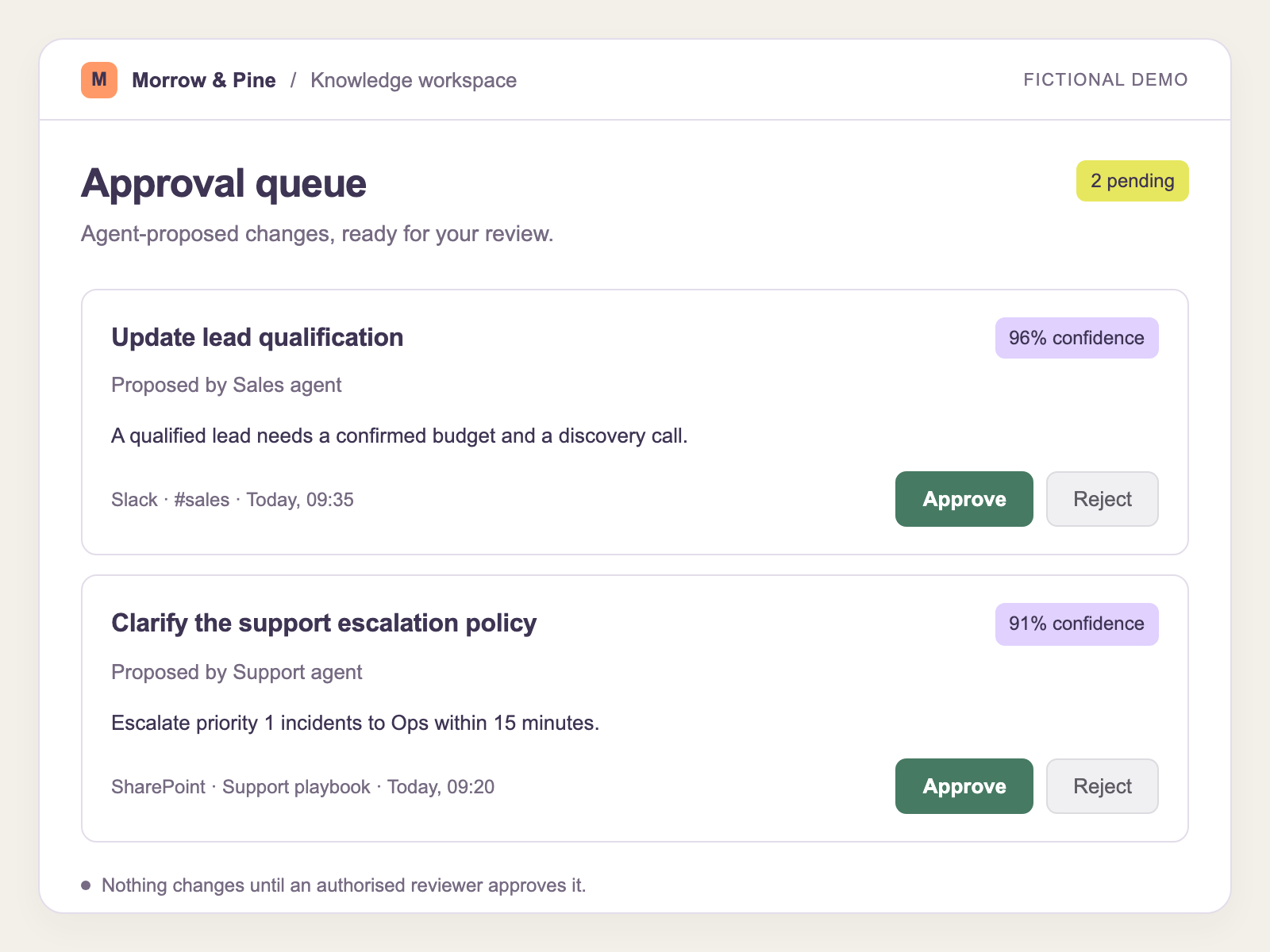
Every agent conversation is a chance to learn something new. A support call reveals that "qualified" now means something different for the enterprise team. A BD agent discovers Acme Corp just acquired a competitor. Oiya surfaces these insights as structured proposals, not raw text, not a dump of embeddings.
But you don't want to review every little thing. That's why proposals carry confidence scores. High-confidence updates to low-sensitivity concepts get auto-approved. Sensitive changes and domains queue for human review. You set the thresholds per concept type, per partition, per source.
Progressive trust. Not an inbox of a thousand approvals.
Source-Level Governance
Control the information flow
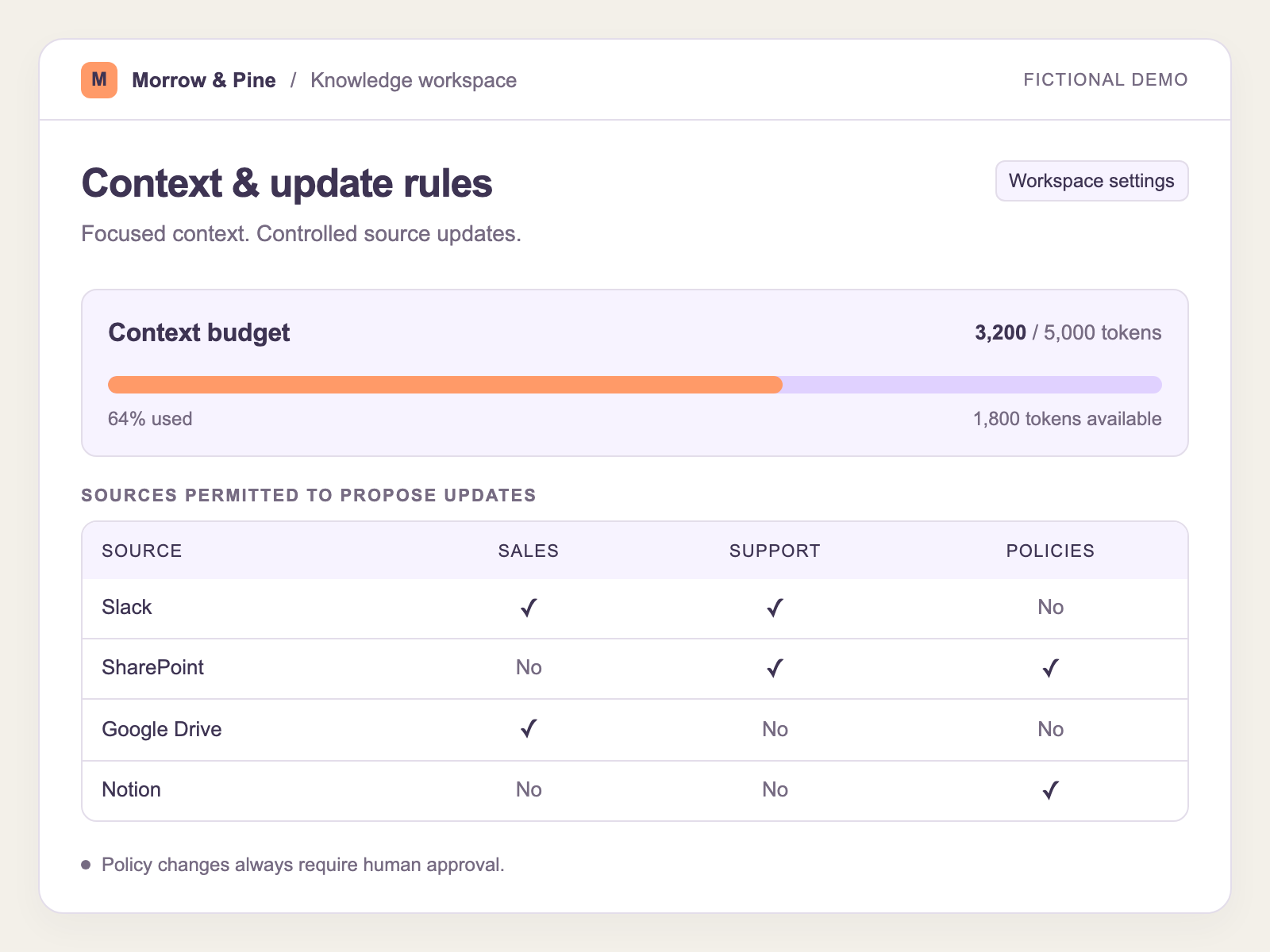
Not all sources should update all concepts. A meeting transcript might be a great signal for client preferences but a terrible one for compliance policies. Oiya lets you define which source types (transcripts, documents, websites) can propose updates to which entity types.
This is where progressive permissions get practical. You're not just controlling who sees what. You're controlling which information flows can shape your agents' understanding of the world. Think of it as data governance for the AI age, not a checkbox exercise, but a real operating model.
Knowledge Evolution
Watch your knowledge base grow up
Your ontology isn't static. It evolves as your business does. Oiya gives you a clear view of that evolution. See what changed, when it changed, and why. Track proposals from draft through review to promotion. Compare versions of policies, entities, and schema side by side.
When Acme Corp's compliance team updates their CR Policy to v2, you see it move through legal review before it goes live. When a new scoring rule gets proposed for regulated industries, you trace exactly which source triggered it and which domain it affects. No surprises. Full provenance.
Knowledge that remembers how it got here.
Deep Permissioning
Permissions that actually make sense
Most platforms give you all-or-nothing access. Oiya gives you a permission model designed for how companies actually work: roles, partitions, and agent-level controls that compose without collapsing.
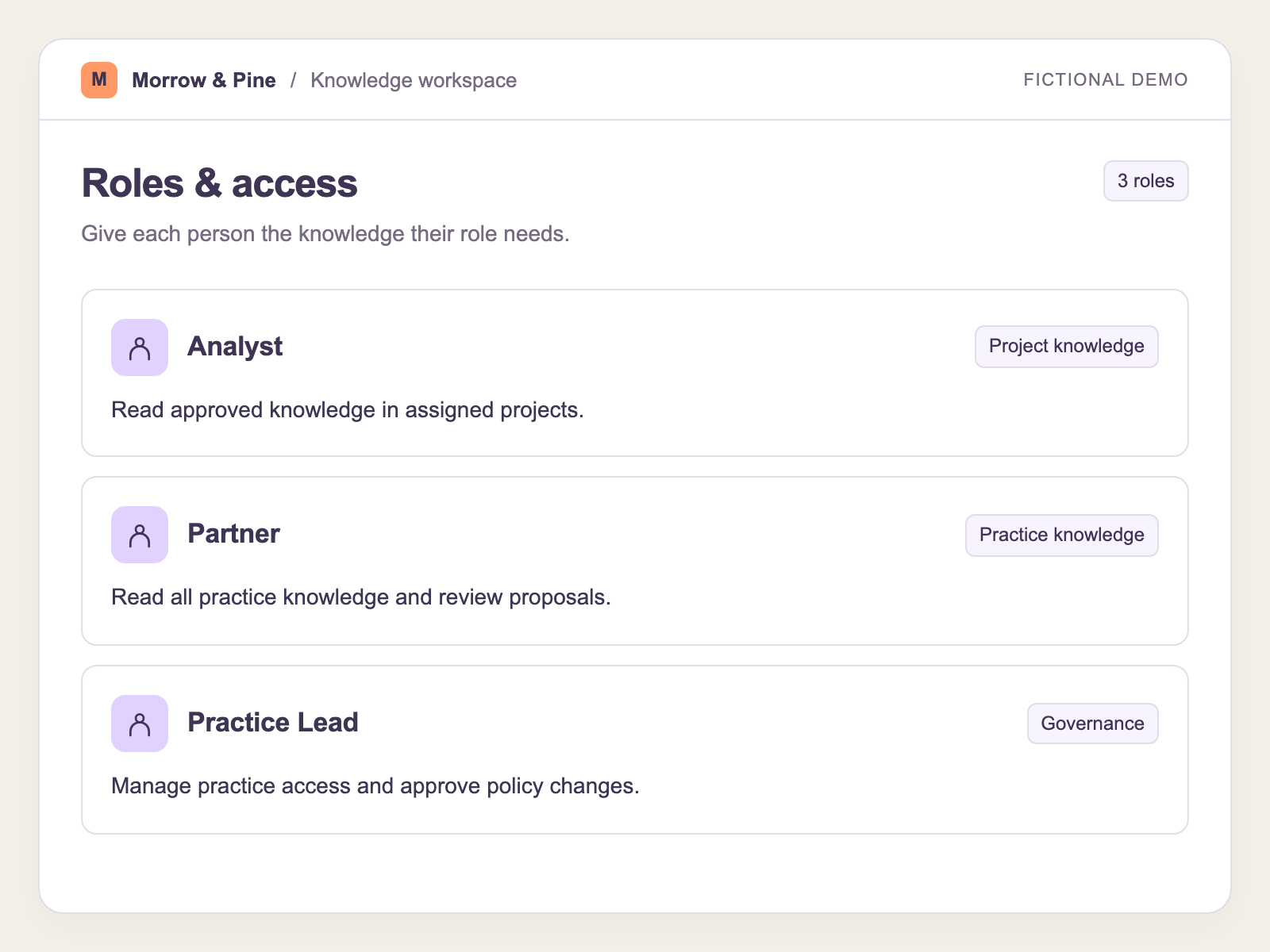
Role-based, partition-aware
Define roles like Analyst, Partner, or Practice Lead. Each role gets scoped access to specific partitions: read-only on core data, write access on their practice domain. No one sees more than they need to.
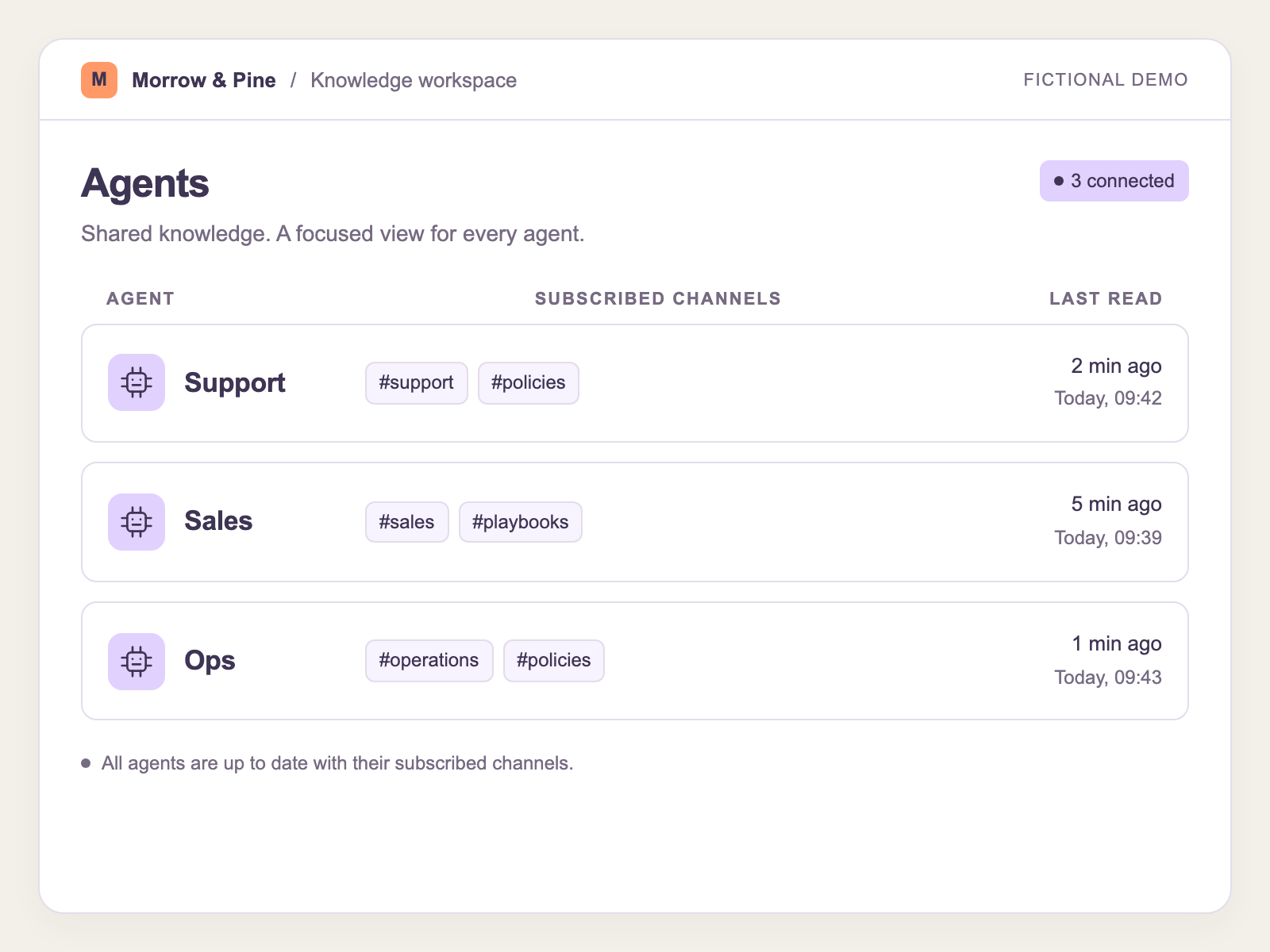
Agent-level governance
Every agent gets its own permission boundary. A BD agent might read Core and Client: Retail but can only propose changes, never approve them. A support copilot gets read-only on HR Core. Permissions follow the agent, not the prompt.
Ready to give your agents a shared brain?
See how Oiya builds the knowledge infrastructure that keeps every agent aligned, governed, and learning.
Explore more
Multiplayer memory
Multiplayer memory so agents remember together, not apart.
Data Fabric
A directory of data sources so agents stop wandering.
Integrations
Connect to the tools your team already uses.
vs RAG
RAG finds documents. Oiya understands your company.
For Engineering Leaders
Versioned, permissioned, observable memory infrastructure.